Chess Endgames For Dummies Cheat Sheet


Mastering chess endgames doesn't require memorizing everything — just focus on the essentials. This Cheat Sheet walks you through sixteen must-know endgames, ten practical rules of thumb, and a smarter study method (NOD: Notice, Observe, Digest) so you can build a strong foundation without rushing through the material.
“Learning chess endgames is too hard”
If you are using this Cheat Sheet, you have likely already come to the conclusion that you need to improve your endgame abilities. Although it is a good thing that you have come to this conclusion, I hope the lessons you had to pay for before getting here were not too painful, yet for some, they certainly will have been.
Not to worry, Chess Endgames For Dummies will help you beyond your wildest dreams. While you may not play endgames like Magnus Carlsen, you will get a lot better, and if you study and understand the material in the entire book, you will know more about endgames than at least 80 percent of all chess players. That sounds like a lofty goal, but that being said, most chess players haven’t studied chess endgames all that hard.
A good realization is that you don’t need to know everything to become a good or even a strong chess player. In the old days of chess, even some challengers for the world championship title were notoriously poor endgame players. Nowadays, however, most top players play the endgame very well, and a few are exceptional at it.
“I don’t know where to start”
Before setting out on that journey, know that there are many solid steps before that are very satisfactory and that can bring a great measure of success with them. For instance, if you cover the material in Part 1, which is:
- The introductory material
- Simple mates
- Basic pawn endings
- Essential rook endings
- Pieces versus pawns
If you study this material to the level of understanding. then you’re already standing on a foundation that exceeds what about 50 percent of all chess players know!
The 16 endgames you must know
Several books have been published about what is essential, or what you should know, about endgames. Some of their chosen examples are great; some are more puzzling. Below, you will see the endgames you must know illustrated; in other words, if you are woken up in the middle of the night after not enough sleep, you should still know how to play these endgames with near perfection.
In the selection, you will notice that there are no queen endings, nor knight, nor bishop, nor mixed piece endings. That is on purpose; they are less important, not irrelevant, just not a need to know.
Simple mates
Figure 1 shows king and queen versus king.
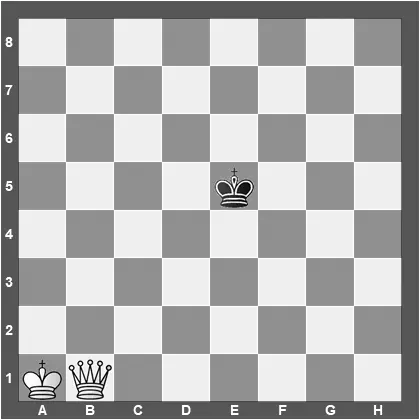
Figure 2 shows king and rook versus king.
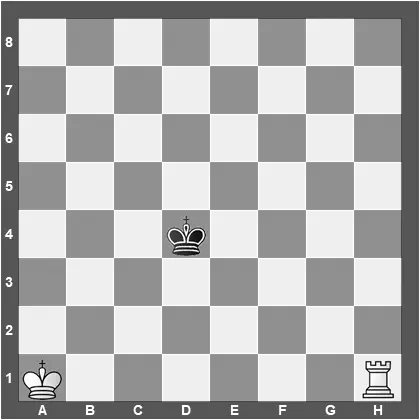
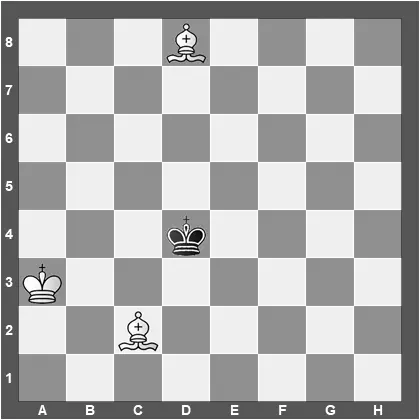
Figure 3 shows king and two bishops versus king.
Basic pawn endings
Figure 4 shows king next to the pawn versus king.
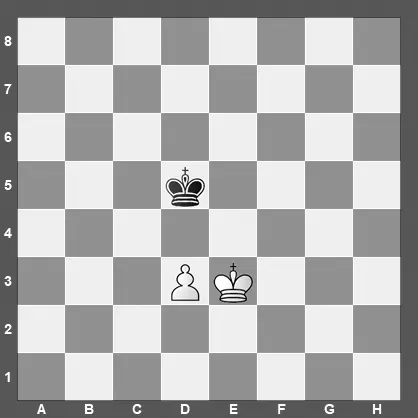
Figure 5 shows king in front of the pawn versus king.
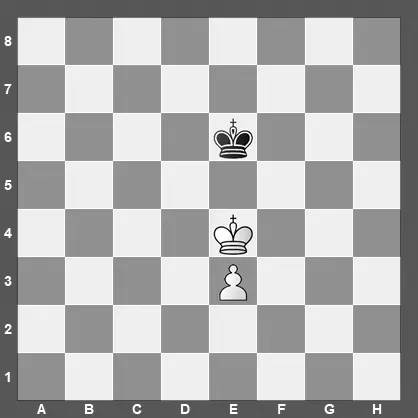
Figure 6 shows king and h-pawn versus king.
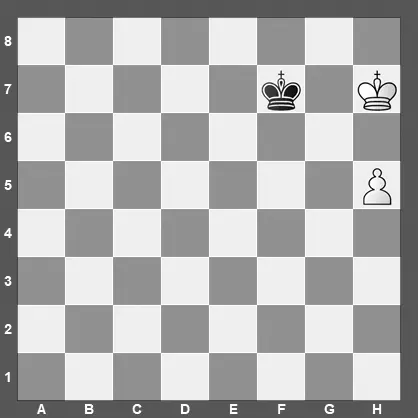
Figure 7 shows shouldering.
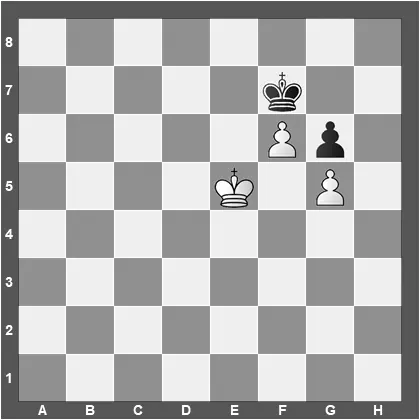
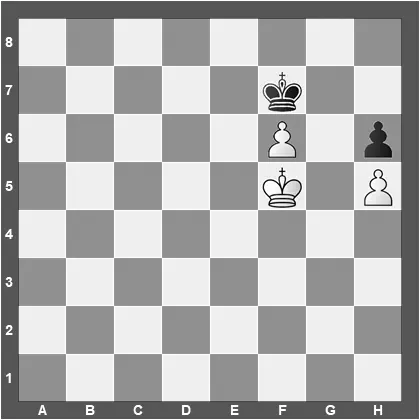
Figure 8 shows triangulation.
Queen versus pawn
Figure 9 shows queen versus g-pawn.
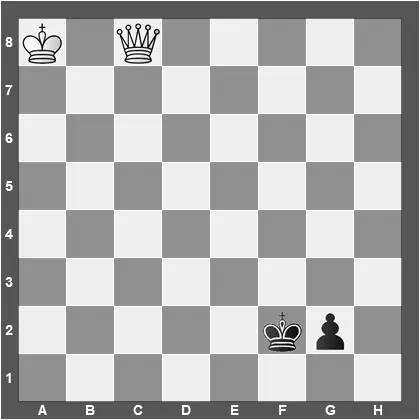
Figure 10 shows queen versus f-pawn.
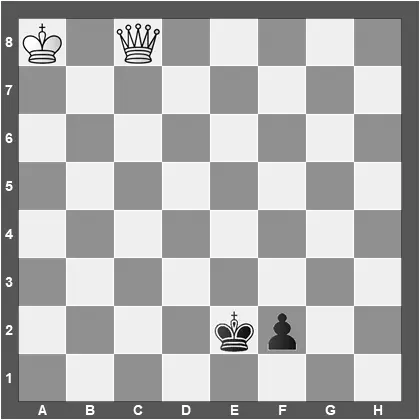
Figure 11 shows Queen versus h-pawn.
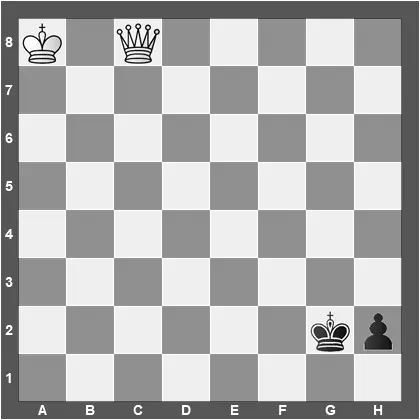
Elementary rook endings
Figure 12 shows the Lucena position.
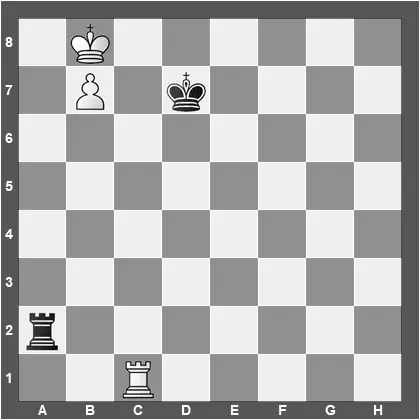
Figure 13 shows the Philidor position.
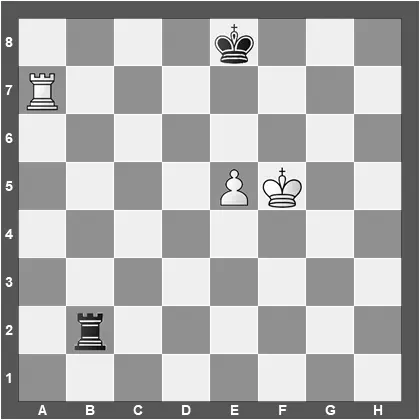
Figure 14 shows the third-rank defense.
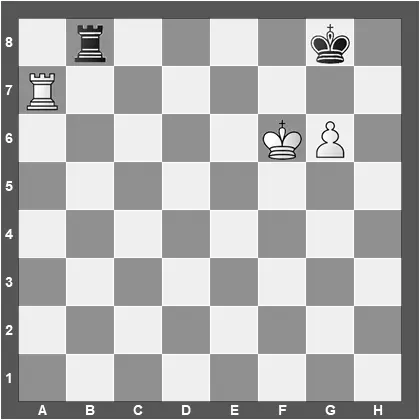
Figure 15 shows the short-side defense.
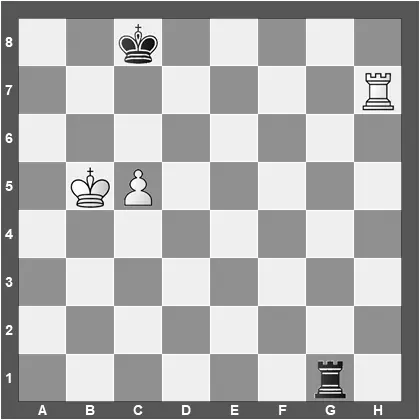
Figure 16 shows the Vancura defense.
10 important rules of thumb for the endgame
After all the studying and understanding the theory behind endgames, it is good to know that some rules apply to the endgame. Throughout the entire book, I present some rules of thumb for each type of endgame. However, some rules are more important than others. These are the ones:
- The king is a strong piece.
- An active rook is worth more than a pawn.
- Rooks belong behind the passed pawn.
- Not all rook endgames are drawn.
- Passed pawns should be advanced.
- A distant pawn is gold.
- Every move is important.
- Opposite-colored bishops are a drawing factor, not a guarantee.
- Bishops and knights don’t work well together.
- Bishops are usually better than knights.
Are these rules universal and supersede the conditions on the board? Of course, not, but they should help you navigate some of the more difficult decisions that arise during the course of a game.
Some endgame action items
Reaching the endgame should not be a race; it should be done with care and consideration in order to reach the best possible version. The same care and consideration should be applied to the study of the endgame.
Don’t race through the book!
One of the biggest mistakes you can make when studying anything, chess endgames included, is to rush through the material. Reaching the endgame should not be a race; it should be done with care and consideration in order to reach the best possible version. The same care and consideration should be applied to the study of the endgame.
The “nod and continue method” doesn’t work
A common mistake I have observed in many students is applying the “Nod and continue method.” In an attempt to get to the next example, subject, chapter, or part, too many students nod as if they understood the material and declare themselves ready for what’s next. But it doesn’t work! Unless you are a special kind of genius, and let’s face it, most of us are not, then you will not have understood the material. You may have some rudimentary grasp of what you’re supposed to do, but if challenged, then you will immediately be in doubt.
The “NOD method” does work!
What is the NOD Method?
- Notice
- Observe
- Digest
This is a concept that is normally applied to conversations, but it should also be applied to your studies of endgames. The NOD Method is broken down like so:
- Notice: Pay attention to the elements on the board, what your opponent did, and how they intend to continue.
- Observe: Pay attention to pieces, piece coordination, and pawn structure. Take note of which pieces and pawns are left, what it means for the moves to come, and what else could become important and relevant.
- Digest: In the above two points, you have collected a lot of information. Don’t rush to make a decision. Process the information, weigh each piece of information against the others, and only once you have digested all of it, should you make an informed decision and play the best move.
Read that book again!
The best book on endgames is the one you’ve already read and understand. Over the years, many of my students, their parents, or other interested players have asked what the best book on endgames is. Before giving them an answer, I ask them which endgame book(s) they have. If the book(s) they have make some sense, I ask what is wrong with that book. There may be valid reasons: the style of writing is dull, the examples are too complicated, and so on. But the answer I usually get is “I don’t want to waste time on the wrong book.” To me, that is often a sign that no attempt to read the book was made. If you read these words, I know you’re motivated, so I will give you the following advice that given by International Master (and sublime author) John Watson: “The best book on endgames is the book you read!”
Right now, there is no next endgame book!
The inevitable follow-up question is always: “So, what should I read after that?” My advice is, again, always the same: Read the book again! Make sure that you understand every example, every diagram, every variation. When you’re done with that, only then can you consider moving on to another book, but quite possibly, it shouldn’t be an endgame book.
About This Article
This article can be found in the category:
Hot off the press
Explore Related content


got more questions?