|
Published:
November 30, 2016

American Sign Language For Dummies with Online Videos

Overview

Grasp the rich culture and language of the Deaf community

To see people use American Sign Language (ASL) to share ideas is remarkable and fascinating to watch. Now, you have a chance to enter the wonderful world of sign language. American Sign Language For Dummies offers you an easy-to-access introduction so you can get your hands wet with ASL, whether you're new to the language or looking for a great refresher.

Used predominantly in the United States, ASL provides the Deaf community with the ability to acquire and develop language and communication skills by utilizing facial expressions and body movements to convey and process linguistic information. With American Sign Language For Dummies, the complex visual-spatial and linguistic principles that form the basis for ASL are broken down, making this a great resource for friends, colleagues, students, education personnel, and parents of Deaf children.

  • Grasp the various ways ASL is communicated
  • Get up to speed on the latest technological advancements assisting the Deaf
  • Understand how cultural background and regionalism can affect communication
  • Follow the instructions in the book to access bonus videos online and practice signing along with an instructor

If you want to get acquainted with Deaf culture and understand what it's like to be part of a special community with a unique shared and celebrated history and language, American Sign Language For Dummies gets you up to speed on ASL fast.

Read More

About The Author

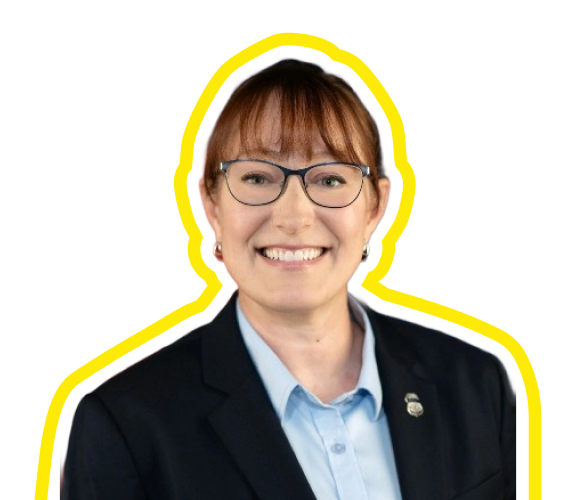
Adan R. Penilla II, PhD, NIC, NAD IV, CI/CT, SC:L, ASLTA, teaches American Sign Language at Colorado State University and is a freelance interpreter for the Colorado court system. Angela Lee Taylor has taught ASL for Pikes Peak Community College and the Colorado School for the Deaf and the Blind.

Sample Chapters

american sign language for dummies with online videos

CHEAT SHEET

Successfully communicating with others in American Sign Language (ASL) starts with learning to sign the manual alphabet, numbers 1 through 10, important expressions, and important one-word questions. And because good communication also involves manners, learning some basic do’s and don’ts of Deaf etiquette is also helpful.

HAVE THIS BOOK?

Articles from
the book

This article is all about providing you with ideas to practice and polish your American Sign Language (ASL) signing skills. So if you're reading this, you're on the right track. Watch Yourself and Others Sign Recording yourself sign helps you see what others see when you sign. Watching interpreters lets you see how they make facial expressions and how they use signs in context.
Signing with your friends has never been easier. You have natural signs and gestures to make your point. This article gives you great ideas for some of the things you can do if you want to pick up American Sign Language a little more quickly. Volunteer at a Residential School for the Deaf One way to immerse yourself in the Deaf world is to volunteer at a residential school for the Deaf.
American Sign Language uses expressions in much the same way that English does. However, in ASL expressions are stated manually, which means that they are seen differently. This slideshow describes some expressions that are commonly used in Sign. Practicing these expressions with people who've been signing for a while can be a shortcut to your success.
Remembering a few simple points can help you make American Sign Language (ASL) handshapes like a lifelong signer. Handshapes are hand formations that you use to sign each letter of the alphabet; this is also called the manual alphabet.Your manual dexterity is like a voice that has the ability to sing, and it requires practice.
The holidays and other yearly celebrations are an enjoyable time for family and friends to gather 'round and join in the festive good cheer. Partake in the festivities with your Deaf friends by practicing the signs shown here. If you're gathered around a table with some Deaf folks and you want to propose a toast, knock on the table to create a vibration.
Enjoying the serene beauty of the night sky is one of nature's most wonderful pleasures. Only one thing is better — having your new Deaf friends along to take in the view. Because American Sign Language is a visual language and the night sky is a visual phenomenon, it's fitting to see how these two awesome pleasures come together.
Going out with the gang is a good time for those who like the night life. Deaf people enjoy their social bonds and can paint the town red with the best of them. Often, people go as singles, and other times, it's couple's night out. The signs shown here will help you when you're planning that night out with your friends.
In the early 1800s, many Deaf schools were established throughout the United States that still exist to this day. It was during this time that manual communication was prospering.In 1880, a Conference for educators of the Deaf took place in Milan, Italy. This was a turning point for American Sign Language (ASL).
Practice signing these basic expressions in American Sign Language (ASL) to meet and greet people, join in on conversations, answer questions, and be polite and courteous.
In American Sign Language (ASL), knowing how to sign the cardinal (counting) numbers helps you in everyday situations like banking and making appointments. Pay attention to the way your palm faces when you sign numbers. For 1 through 5, your palm should face yourself. For 6 though 9, your palm should face out toward the person who’s reading the sign.
Learning the manual alphabet in American Sign Language (ASL) will help you when you don’t know a sign as you begin communicating. If you don’t know the sign for something, you need to use the manual alphabet to spell the word, or fingerspell. Check out and practice the manual alphabet:Note: If you need to fingerspell a word that has two letters that are the same, make a small bounce between the letters or simply slide the repeated letter over slightly.
Successfully communicating with others in American Sign Language (ASL) starts with learning to sign the manual alphabet, numbers 1 through 10, important expressions, and important one-word questions. And because good communication also involves manners, learning some basic do’s and don’ts of Deaf etiquette is also helpful.
Iconic or natural signs look like what they mean — the up and down motion of brushing your teeth that means toothbrush, for instance, or the right and left punches that mean boxing. Iconic signs always show action. Here are some examples:BoxingLooks like you’re “putting up your dukes.” Like the sign for boxing, many sports signs are iconic.
Communicating a concept in Sign is often made clear by using body language. The meaning of I don't know comes through clearly when you raise your shoulders, tilt your head, and turn your palm up. Signing I'm sick is more easily understood when you accompany the sign with half-shut eyes, an open mouth, and a partially extended tongue.
Being sensitive to Deaf people is a part of Deaf etiquette that's really for the hearing. Deaf people already know what it means to be Deaf, but those who can hear probably never think about the day-to-day struggles that the Deaf have to overcome in this world.Getting close to a Deaf person requires a little vulnerability on both sides.
The workaday world is full of tasks, from stocking shelves to attending meetings. The American Sign Language (ASL) signs shown here make work a little more fun; you can carry on a private conversation with another signer during a boring meeting. BUSINESS: CLOSED DOWN (as in computer screen): DISCUSS: MEETING/CONFERENCE: PROMOTION: TRADING (stocks): WORK: Put these work-related signs into action in the following sentences:English: Are you going to the conference?
Classifiers in ASL may sound complicated but they are not; they are a fun way to explain the finer points of the message you are conveying. Once you get the hang of them, you can show off your skill to your Deaf friends and let them teach you more about classifiers. Classifiers are nothing more than handshapes that are grouped into categories with a specific purpose as describing something, showing relationships, demonstrating something, or taking the place of an object.
Raising a brood is quite a responsibility. Nothing is more impressive than teaching your children a second language like American Sign Language (ASL). You can use the signs shown here every day around the house. As you're hanging out with your Deaf chums, see which signs they use with their children and take note.
Constructed Action in American Sign Language (ASL) is similar to Constructed Dialogue except that you sign actions instead of words from a conversation. Here's a scenario:Wanda is talking to Della about the new dress she purchased to wear to a dinner last week. Wanda is telling Della that the dress fit fine at the mall, but on the night she wanted to wear it, the dress was too short!
Constructed Dialogue is a way to communicate the details of what was said in a conversation. In American Sign Language (ASL), this technique requires your body to shift slightly from side to side so you can role shift. The purpose of this shift is to take on the character of the two people who had the conversation you're describing.
As you become more confident in your ability to communicate through American Sign Language (ASL) and begin to meet Deaf acquaintances and form friendships, keep some simple etiquette do’s and don’ts in mind.Do’s To get a Deaf person’s attention, tap him or her on the shoulder or flick the light switch. Let a Deaf person know that you can hear and that you’re learning Sign.
Going to the hospital during an emergency is a scary thing, and if you're communicating via American Sign Language, it can be even scarier, but it doesn't have to be. Nothing is scary about these emergency-related signs (except having to use them). These signs may be your 9-1-1 when you need to help out in an emergency!
Making phone calls as a Deaf person is an interesting event. Some Deaf people use a videophone to see who they are conversing with while other Deaf people would rather talk to other people using a traditional telephone. The question is, how do Deaf people use a house phone/landline if they cannot hear? Deafness comes at different levels.
What you know about rhetorical questions in English is not the same as rhetorical questions in American Sign Language (ASL). In English, a rhetorical question is a question that does not require an answer. In ASL, a rhetorical question is asked and the person who asks the question gives the answer as well. A rhetorical question is a way of making a point by providing the information for the very question you ask.
Most people are slaves to their day planners and schedules, and the Deaf are no different. They rely on their calendars like everyone else. To sign months of the year in American Sign Language (ASL), you fingerspell them.You may see a person signing calendar while using the first letter of the month incorporated in the sign.
Interpreting for the Deaf community is very much a part of the Deaf experience. Deaf people used to use family members as interpreters. Often the interpreter was usually the first female of the brood. Often when the Deaf parents needed an interpreter, they would rely on their children; professional, certified interpreters with a common standard was not established at this time.
At home or out and about, you often talk about people who aren't right there with you, and that's the same whether you're signing with American Sign Language (ASL) or speaking English.For instance, at work, you may discuss with one of your co-workers how much you like your boss. When using Sign, you don't have to be able to see someone (or something) to be able to talk about him, her, or it.
Signing one-word questions in American Sign Language (ASL) is a way to initiate small talk, get to know people, and gather information. When you sign these one-word questions, look inquisitive; the facial expression will come naturally when you are genuinely interested. Also, tilt your head and lean forward a little as you sign the question.
When participating in the Deaf community, a good rule to follow is, "When in Rome, do as the Romans do." In other words, when you're with Deaf people, respect their customs; what you don't know, you can figure out by observation and through asking questions. Basically, just watch and learn. Some of the things you may notice include the following: A sense of unity: Depending on the size of the Deaf community, Deaf people congregate at activities such as bowling leagues, Deaf clubs, Deaf plays, and fundraisers.
In American Sign Language (ASL), turning a verb into a person is called personification. You do it with two simple motions: Sign the verb and then glide the heels of your hands down the sides of your body with your fingers extended outward. The result of this is an agent. Look at this list.WRITE + AGENT = WRI
Signing about where you're from is a great way to converse with a new friend in American Sign Language. Because it can lead to other topics of conversation, it's a common icebreaker and will help you practice your Sign vocabulary.You can practice your fingerspelling — you may not know the sign of a particular location, or it may not have a sign — and expand your geographical knowledge.
Everybody eats, so being able to let people know in American Sign Language (ASL) that you're hungry and what you want to eat is very useful. This video shows a Sign language conversation about what to have for lunch.
The roots of American Sign Language (ASL) run fairly deep. Although early Greek writings refer to manual communication, no one knows whether those writings refer to just a few gestures or an actual alternative language using signs. Hippocrates studied deafness, and Socrates believed that it was a natural occurrence for Deaf people to communicate manually.
The videophone has replaced the TTY for Deaf people calling friends and family, making appointments, and attending to daily business needs. To set up a videophone, all you need is a videophone, Internet connection, and a screen to connect the VP, or videophone.Deaf people do have the option, however, of having an application on their smartphones.
https://cdn.prod.website-files.com/6630d85d73068bc09c7c436c/69195ee32d5c606051d9f433_4.%20All%20For%20You.mp3

Frequently Asked Questions

No items found.