|
Published:
June 2, 2026

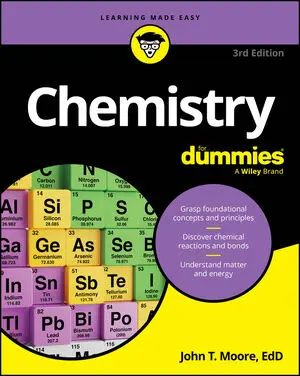
Chemistry For Dummies

Overview

Discover clear, time-saving explanations of chemistry concepts

Chemistry For Dummies, 3rd Edition is a breath of fresh air for high school and college chem students. This book simplifies chemistry basics, making it easy to understand everything from matter and molecules to moles and measurements. Mapping to a typical chemistry course (one year of high school or one semester of undergrad), this book has the definitions, examples, and explanations you’ll need to pass your exams and get the grade you need. Following right along with key teaching methods, you’ll be sure to stay on track from day 1.

Inside:

  • Get simple explanations of fundamental chemistry principles
  • Learn the chemical reactions and bonds you need to know
  • Discover the chemical properties of matter and energy
  • Improve your grade in your chemistry class

Chemistry For Dummies, 3rd Edition is for students who want a reference that explains concepts and terms more simply—and for anyone looking for a chemistry refresher.

Read More

About The Author

John T. Moore, EdD, is a chemistry professor at Stephen F. Austin State University. He’s the author of many chemistry titles, including all editions of Chemistry For Dummies.

Sample Chapters

Read an Excerpt

chemistry for dummies

CHEAT SHEET

During the first year of high school chemistry or the first semester of college chemistry, all the terms, units of measurement, and atoms, molecules, elements, and compounds may seem a bit overwhelming. The good news: Your Chem I class doesn't have to be torture. This handy Cheat Sheet provides some basic information you can refer to regularly to make your chemistry class just a tiny bit easier.

HAVE THIS BOOK?

Articles from
the book

During the first year of high school chemistry or the first semester of college chemistry, all the terms, units of measurement, and atoms, molecules, elements, and compounds may seem a bit overwhelming. The good news: Your Chem I class doesn't have to be torture. This handy Cheat Sheet provides some basic information you can refer to regularly to make your chemistry class just a tiny bit easier.
By calculating the enthalpy change in a chemical reaction, you can determine whether the reaction is endothermic or exothermic. Chemical reactions transform both matter and energy. Though chemical equations usually list only the matter components of a reaction, you can also consider heat energy as a reactant or product.
https://cdn.prod.website-files.com/6630d85d73068bc09c7c436c/69195ee32d5c606051d9f433_4.%20All%20For%20You.mp3

Frequently Asked Questions

No items found.


