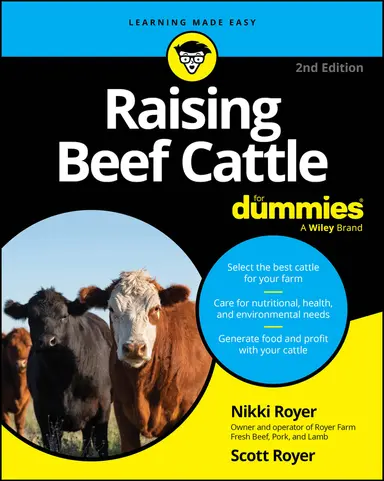
Raising Beef Cattle For Dummies Cheat Sheet


Whether you’re new to raising cattle or have questions about your current herd, there is a lot to learn and remember about these amazing four-legged (and four-stomached) creatures. This cheat sheet focuses on some of the key areas that are part of a successful and enjoyable cattle rearing experience, including
- Determining what you want to accomplish by raising cattle
- Deciding whether you have what is needed to safely and humanely raise cattle
- Preparing your farm and facilities for cattle
- Caring for your cattle’s behavioral, nutritional, and health needs
- Evaluating ways to make money with cattle
Know Why You Want to Raise Cattle
Why do you want to raise cattle? Knowing your goals makes it easier to select the right kind of cattle, care for your cattle and hopefully profit from your cattle.
- Do I want to become more self-sufficient and raise my own food?
- Am I looking to produce extra income?
- Is my goal to improve the soil, water and productivity of my farm naturally?
- Am I searching for a fun and educational family project?
After you determine why you want to raise cattle, ask yourself the following questions:
- Am I prepared to meet the basic needs of my herd?
- Can I provide wholesome feed and water every day, rain or shine?
- Do I have clean and spacious living and eating areas for my cattle?
- Do I have the ability to handle big projects like fence building or emergency situations (like escaped cattle or birthing difficulties)?
- Have I budgeted for all the expenses that come along with raising cattle like the initial purchase price, feed, healthcare, facilities, land, and insurance?
Like all living creatures, cattle deserve respect and care. If you aren’t able to answer yes to all these questions, hit the pause button before buying cattle or expanding your herd. If you had a few or all no responses, don’t give up on raising cattle; you may need to just learn more or save up some money so that you can be better prepared to be a great cattle herdsperson in the future.
Getting Your Farm Ready For Cattle
Get your cattle experience started on the right hoof by preparing barns, fences, pastures, and eating and drinking spaces for your herd. Select the best type of animal to fit your goals and resources:
- Provide living accommodations. Cattle need fenced spaces to graze, a secure pen or enclosure, and clean spaces to rest, eat, drink, and get away from extreme weather.
- Plan the feeding program. Meeting your cattle’s basic nutrient requirements is critical to maintaining their health and production. Feed and feeding your cattle are major investments of your time and money, so make the effort to get the right nutrition for your cattle and deliver it in an efficient manner.
- Manage pastures, manure and water sources. The healthier and more diverse your pastures are means better feed for your cattle and less money spent on buying feed. Properly utilized manure can lead to more productive pastures, and clean water sources are better for your cattle.
- Find the best cattle for you and your farm Consider whether you want a young calf (either bottle baby or weaned) or an older animal like a bred heifer or cow. Be prepared to spend time visiting other farms, consignment sales, and auction barns and looking online to find the right animal for you.
Dos and Don’ts for Caring for Your Cattle
Raising cattle properly has many aspects like low-stress handling, preventive healthcare, treatment of sick animals and care for calves and pregnant cows. Here are some of tips to make caring for your cattle simple and successful:
- Do make the effort to understand what makes cattle feel comfortable and uncomfortable. By knowing some cattle behaviors, you can more easily work with them, keep them calm, and increase safety for you and the cattle.
- Don’t let one bad apple ruin your herd. Cattle dispositions are heritable and contagious. It takes only one mean or wild cow or bull to be dangerous and negatively influence the entire herd. Sell these animals as culls (to be used for meat).
- Do remember to handle bulls and new mother cows with caution. Bulls can be dangerous due to their large size and natural instinct to defend the herd. Momma cows with young calves can be hypersensitive about protecting their young.
- Don’t leave preventative healthcare to chance. Create and follow an annual healthcare calendar based on your herd’s geography and needs. Consider the timing of pre-calving vaccines for pregnant cows, breeding soundness exams for herd bulls, vaccines for calves pre-weaning and at weaning, and the need to treat for internal and external parasites.
- Do become familiar with the types of common cattle diseases. Even though cattle are sturdy animals, they can still be afflicted with respiratory, clostridial, reproductive, and other infectious diseases as well as internal and external parasites.
- Do be sure each calf gets enough colostrum. Colostrum is the first milk a cow produces after giving birth. It’s in high solids, minerals, proteins, and, even more importantly, antibodies. These antibodies protect the calf until its immune system can start producing its own antibodies. By two hours after birth, a calf needs to be standing and nursing. In the first six hours of life, the calf should consume at least 2 quarts of colostrum and then another 2 quarts in the next six hours.
- Don’t let your cows get too thin. At calving, aim for your cows to have a body condition score of 5 to 6 and first-time calving heifers should be 6 or higher. Thin cows may have trouble giving birth, produce lower quality colostrum and overall less milk, and may rebreed slower.
More than Just Fun: How to Make Money from Your Cattle
Raising cattle can be more than just an entertaining hobby; they can be profitable as well. Here are some possibilities to consider for creating a money-making cattle business.
- Do I have extra pasture? If you have fields you’re tired of mowing, consider raising stocker calves, tending cows for absentee owners, or raising 100-percent grass-fed beef.
- Do I want to sell breeding stock or show cattle? You can offer your cattle for sale right off the farm in a private treaty transaction. Participating in consignment sales held in conjunction with livestock shows can be an excellent way for a new breeder to merchandise bulls and breeding females. If you have commercial feeder cattle, look into special consignment sales instead of just the regular weekly auction at the local sale barn. You can also sell your cattle in an online auction.
- Do I want to produce more than just cattle and market beef directly to the consumer? As more and more people are becoming interested in how their food is raised, you have a growing opportunity to sell your beef directly to families and restaurants. You need to have all the proper licenses, insurance, and an able and willing meat cutter to get your product safely and legally from pasture to plate, but providing beef you have raised can be a rewarding and financially successful endeavor.
About This Article
This article can be found in the category:
Hot off the press
Explore Related content