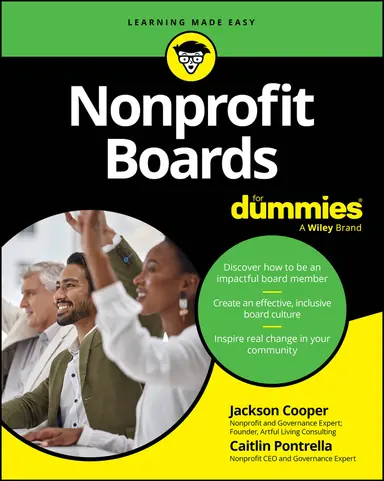
Nonprofit Boards For Dummies Cheat Sheet

Share


Joining a nonprofit board can feel a lot like jumping into the deep end, and finding solid ground can take a while. Whether your gave you thorough onboarding or dropped you into the thick of board work with little more than a handshake and a seat at the table, finding your voice and how you can best contribute takes time. Luckily, this cheat sheet can help you get up to speed a lot faster. It includes everything you should (and shouldn’t!) do during your first 30 days as a new director!
What to do your first 30 days as a nonprofit board director
- Ask for and review critical documents. That includes copies of the bylaws, recent board meeting minutes from the last year, the code of conduct, the board manual and all policies, insurance policies, the active strategic plan, the staff organizational chart, and current financial statements.
- Go to coffee with the board president. Use it as an opportunity to get a little more color on the board’s strategic priorities and what has most recently been going on in the boardroom. Also check in on any logistics you’re still unsure about, including meeting cadences, upcoming events, and fundraising expectations, as well as what possible committees you can join. You should leave this meeting feeling oriented into the “big stuff” the board is currently tackling.
- Take the executive director to coffee. Ask them about what connects them to the mission and what their perspective is on the organization’s health and direction. They may also have some ideas on where you can be most helpful. This moment is a perfect chance to hear a bit more of an insider’s perspective on the organization while also starting to build your professional relationship with its leader. (Oh, and make sure to pick up the tab).
- Take a tour of every committee, or at least get scheduled to do so. Even if you already know what committee you’re going to serve on, touring through the others for a meeting or two gives you a much stronger sense of what’s going on, who’s doing what, and where possible challenges may lie.
- Introduce yourself to your fellow directors and take time to learn about their backgrounds, expertise, and tenures. You can’t possibly meet everyone all at once, but these folks are the ones you’ll be working shoulder to shoulder with, year in and out, through all the ups and downs of the board. If you have a board buddy, they probably will be reaching out to schedule a one-on-one, too. Remember: The sooner you get to know each other, the better team you’ll be.
- Sign and submit any paperwork required. Every board is different, but this documentation may include a board agreement, conflict of interest disclosure, confidentiality agreement, and background check. Send in your headshot and board bio, and make sure the organization has your address and contact information for the directory.
- Confirm your communication preferences. Your board secretary is your primary partner on this point. Check that all the board meetings and key events have been added to your calendar and confirm that your email has been added to any email distribution servers. You don’t want to miss any important dates!
- Celebrate and share the good news! Tell your family and friends about your new volunteer role. Make a post on social media and use the chance to tell your story about what drew you to the cause (don’t forget to include a link to the organization’s website). Think of it as your very first step to becoming an ambassador for your organization’s mission.
- Think about what a meaningful donation may look like for you. Most boards expect you to make a personal financial gift, and being thoughtful about what that will be is important. To be clear, your gift doesn’t have to be the largest on the board, but it should reflect your commitment to the mission. If doing so is helpful, ask to schedule time to sit down with whoever is leading fundraising for the organization.
- Take lots of notes! Your first month on the board can be a bit overwhelming. You’re getting information from all directions on all different topics. Don’t rely on your memory to hold crucial information or small details. Get a dedicated notebook for your board service and bring it to every meeting. It serves as a great record you can refer to.
What not to do your first 30 days as a nonprofit board director
- Be afraid to ask a “dumb” question or say “I don’t know.” Everyone on the board has been in your seat and understands the journey to becoming a well-informed director. You were invited to join because of your expertise, perspective, and experience, not because you know everything about this particular mission. Take your time.
- Go around the executive director to get information from staff. You’re likely eager to get to know more about the programs, tour the facilities, or see the mission up close and personal, and that enthusiasm is welcome. What isn’t welcome is breaking the chain of command and potentially undermining your executive leader. Instead, check in with the board president about what you’re interested in doing and learning.
- Come in with an agenda. Your first 30 days are for listening and learning, not trying to push your perspective or change. You’ll have plenty of time to contribute after you have a more complete picture of what the organization is up to.
- Vote on matters you don’t understand. Asking for clarification before casting your vote is completely acceptable and, in fact, encouraged. Especially as a new director, you lack the context and detail to participate in votes early on. Saying no or abstaining is better governance than voting yes on something you don’t really understand.
- Share board discussion outside the boardroom. As a director, you get access to sensitive information about the organization’s finances, personnel, and strategy and are part of discussions where people need to feel safe to talk in draft. Your legal duty is to protect the sanctity and trust of the board. Additionally, don’t go seeking out confidential information such as donor data or personnel information like individual salaries; doing so is inappropriate. If you think you need access to something, bring your request to the president.
- Assume something is wrong just because it’s unfamiliar. Nonprofit finance operates differently than in the for-profit world, and things like fundraising, grants, and program budgeting come with their own logic. Even if you bring expertise in similar domains, start from a place of curiosity.
- Forget to have fun! Board service is a serious commitment, but it should be one that’s fulfilling and fun. Don’t forget to enjoy the experience, share your personal story of what brought you here, and laugh alongside your fellow directors when things are going well.
About This Article
This article can be found in the category:
Hot off the press
Explore Related content