|
Published:
May 14, 2012

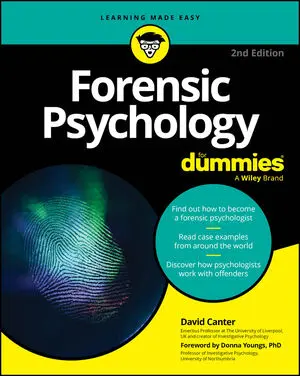
Forensic Psychology For Dummies

Overview

A fascinating guide on the psychology of crime

Thinking of a career that indulges your CSI fantasies? Want to understand the psychology of crime? Whether studying it for the first time or an interested spectator, Forensic Psychology For Dummies gives you all the essentials for understanding this exciting field, complemented with fascinating case examples from around the world.

Inside you'll find out why people commit crime, how psychology helps in the investigative process, the ways psychologists work with criminals behind bars - and how you too can become a forensic psychologist. You'll discover

what a typical day is like for a forensic psychologist, how they work with the police to build offender profiles, interview suspects or witnesses, and detect lies!

  • Covers the important role psychology plays in assessing offenders
  • Explains how psychology is applied in the courtroom
  • Explains complicated psychology concepts in easy-to-understand terms

If you're a student considering taking forensic psychology or just love to learn about the science behind crime, Forensic Psychology For Dummies is everything you need to get up-to-speed on this fascinating subject.

Read More

About The Author

David Canter, the world-leading crime psychologist, is perhaps most widely known as one of the pioneers of 'Offender Profiling', being the first to introduce its use to the UK. He subsequently founded the discipline of Investigative Psychology and is now Director of the International Research Centre for Investigative Psychology.

Sample Chapters

forensic psychology for dummies

CHEAT SHEET

Forensic psychology is the application of psychological knowledge to the criminal justice system. Print out and pin up this Cheat Sheet to remind yourself of how forensic psychology is used within the justice system to assess offenders, identify criminal capacity in young people, and to characterize psychopaths.

HAVE THIS BOOK?

Articles from
the book

Robert Hare's Psychopathy checklist is a tool commonly used in clinical practice to assess whether an individual is a psychopath. Here are Hare’s definitions of two types of psychopath: Selfish, callous psychopaths Glibly, but superficially charming Grandiose feeling of how important s/he is Patho
Forensic psychology is the application of psychological knowledge to the criminal justice system. Print out and pin up this Cheat Sheet to remind yourself of how forensic psychology is used within the justice system to assess offenders, identify criminal capacity in young people, and to characterize psychopaths.
Criminality can often be linked back to an offender’s childhood. A child who exhibits three or more of the following behaviours is at risk of becoming seriously anti-social as an adult: Habitual lying Cruelty to animals Cruelty to people, especially vulnerable people Breaking into buildings or cars
Forensic Psychologists often assess offenders to determine whether they’re fit to plead their case in court, or are likely to be violent in the future. There are a number of important issues to be considered in this assessment and these are outlined here: Family background Any history of abuse? Offender ever removed from family?
https://cdn.prod.website-files.com/6630d85d73068bc09c7c436c/69195ee32d5c606051d9f433_4.%20All%20For%20You.mp3

Frequently Asked Questions

No items found.