


Traditional Chinese Medicine For Dummies Cheat Sheet


As the name implies, Traditional Chinese Medicine (TCM) is a medical system that originated in China and was developed and adapted over thousands of years to prevent, diagnose, and treat human illness. Practitioners still use it around the world, and people continue to research and investigate its theories and practices.
This cheat sheet provides a summary of key things to know about TCM and how it may fit into your personal healthcare regimen.
Starting with TCM concepts
For as long as humans have been sick or injured, someone has tried to heal them. Although a majority of the world uses Western medicine, TCM and other traditional cultural healing practices offer alternative and/or complementary therapies that are more natural and less focused on medications and surgical procedures. All medical systems started by observing the circumstances (weather conditions, physical signs and symptoms, and so on) around when people get sick, followed by a lot of trial and error, trying to figure out what can make them well.
Discovered in 1973, the oldest TCM medical literature dates to 299–100 BCE. These scrolls describe some of the concepts and techniques that are fundamental to TCM practice today, including
- Yin and Yang: The basic theory of codependent, complementary opposites that explains and describes the organization, relationships, and actions of all living things in the universe.
- Qi or Chi (pronounced chee): The energy that activates, connects, creates, defines, forms, makes, maintains, moves, supports, sustains, and transforms all things; it’s also called life force or vital energy.
- Channels or meridians: Pathways associated with organs such as the liver, kidney, and heart, where Qi travels throughout the body.
In very simple terms, illness and disease occur when Yin and Yang are unbalanced, interrupting the flow of Qi in any of the channels.
Reviewing TCM therapies
At its core, TCM is focused on prevention because it is more practical to keep a person healthy on all fronts — spiritual, emotional, mental, and physical — than trying to fix them after something goes wrong. Over the millennia, TCM therapies have evolved and expanded while better materials and technologies have become available. The following table describes the therapies that you can find available in the U.S. from a licensed practitioner.
How to find a TCM practitioner
In the U.S. and other Western countries, people generally know TCM practitioners as acupuncturists, even though a practitioner’s scope of practice includes all or some of the TCM therapies, not just acupuncture. Although other professionals offer some TCM therapies, only a practitioner who has a license can call themselves an acupuncturist, and only someone who has the appropriate level of education can apply for and test for a license.
The appropriate level of education required to apply for and test for licensure (also called certification) is a Master’s degree from an accredited TCM program. A TCM practitioner must undergo additional education if they want to obtain a doctorate, which enables them to use the title Doctor.
You can attain a license at the national level through the National Certification Commission for Acupuncture (NCCAOM) or at the state level through a State Board. Applicants must pass an examination to obtain a license. After they receive a license, the TCM practitioner must renew their license at regular intervals and demonstrate that they completed a required number of continuing education units (CEUs). Some practitioners have a license at both levels.
You can find a licensed practitioner through the NCCAOM website’s Find a Practitioner Directory (www.nccaom.org/find-a-practitioner-directory) or the American Society of Acupuncturists’ Find a Practitioner page (www.asacu.org/find-a-practitioner).
Enhancing your health with TCM
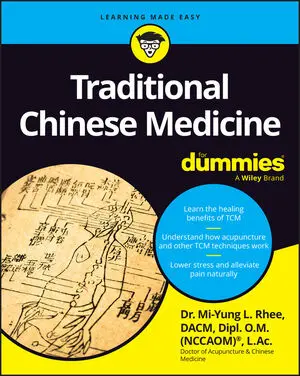
The ways in which TCM can help support your health go well beyond the space allotted on this webpage (or even in the related book, Traditional Chinese Medicine for Dummies). The conditions discussed in the book include:
- Pain (arthritis, back pain, headache)
- Addiction (substance abuse, smoking)
- Mental health (stress, trauma, depression, and anxiety)
- Reproductive health for women and men (fertility, pregnancy, health during and after birth)
- Cancer symptoms and cancer-treatment side effects (fatigue, pain, and neuropathy; loss of appetite, nausea, and vomiting)
But people have used TCM for centuries to treat everything from the common cold to carpal tunnel, post-stroke to post-surgery, indigestion to infertility, and the list goes on. A September 2024 observational study published in Medicine stated that “emerging trends in acupuncture research have focused on neurological health issues, oncology and cancer treatment, women’s health and hormonal issues, sleep problems, and digestive issues.”
About This Article
This article can be found in the category:
Hot off the press
Explore Related content


got more questions?
