Disaster Prepping For Dummies Cheat Sheet


Throughout Disaster Prepping For Dummies, we discussed essential items to stash in your bug-out bag in the event that you have to evacuate quickly. We also discussed various skills that would be helpful in an emergency. Lastly, while we discussed the best vehicles for disaster survival in Chapter 23, we had more we wanted to say about them. In this Cheat Sheet, we have gathered those bug-out items, disaster survival skills, and vehicle details into one place.
Important bug-out bag items
Chapter 16 of Disaster Prepping For Dummies covers the bug-out bag in detail, but this cheat sheet will highlight the most important items and the reasons to include them. These items follow the survival priority, starting with breathing.
Micro oxygen can and N95 masks
N95 masks provide some limited protection from infectious agents and large particulates such as ash. However, they do not protect you from carbon monoxide in a house fire or wildfire, or from toxic or radioactive gases from an industrial or nuclear accident. That’s a problem since you can only maintain consciousness for about three minutes without air. In these situations, the little cans of oxygen can be lifesavers. A five-liter can of Boost Oxygen is smaller than a soda can, weighs only three ounces, and provides 100 one-second inhalations. Even with strenuous activity, that’s about two to three minutes of air. Buy an extra can or two to try it out. Challenge a friend to a strenuous hike or run … and then cheat by sucking down a can of oxygen.
Water bottles, water filter, and plastic water bag
You can only live about three days without water. Although one gallon per person per day is recommended, the minimum required to stay alive in a temperate environment is about 32 ounces (1 liter) a day. As an absolute minimum, you want a couple of 16-ounce bottles. They should be the high quality, rigid plastic bottles so they don’t get crushed and leak. If you have other family members, water and oxygen should be the top priority items in their bags as well. You also want an empty collapsible water bag, a water filter (such as the LifeStraw discussed in Chapter 6 of Disaster Prepping For Dummies), and water treatment tablets like Potable Aqua. These items are small and very light but are extremely important because they allow you to safely access water from almost any source. This is way better than freeze-dried water.
Protein/keto food bars
Although you can only last three minutes without air and three days without water, most people can survive three weeks without food. Although it’s a lower priority, hunger reduces your ability to focus and your morale. The best survival food is compact, high in calories but low in carbohydrates and fiber. Carbohydrates, particularly with simple sugars and high fiber, provide short-term energy but with a blood sugar spike followed by a crash and early hunger. They also increase thirst, and the fiber increases the production of solid waste. This means you have to go to the bathroom more often, which can be an issue during an emergency evacuation or when water or septic systems are limited. Instead, fats and proteins tend to satisfy hunger longer. Food bars advertised as Keto usually have a high concentration of fats and proteins. Since fat carries most of the flavor of food, many of these bars are actually pretty tasty.
First aid kit with emergency medical guide
Having a solid first aid kit in your bug-out bag is vital. From bug bites to bronchitis, you want to be able to treat any non-life-threatening condition and stabilize more serious injuries and illnesses. A first aid kit is useless, however, if you don’t know how to use it. Having a good medical reference guide is critical, and not just on your phone. A pocket-sized EMS Field Guide, which can be purchased on Amazon, will easily fit in your first aid kit and could be a lifesaver. Don’t just buy it and stick it in there. Make sure you have a basic understanding of how to find stuff in it quickly. Pick a random medical emergency and see if you can find how to treat it in the EMS Guide. It’s not quite as good as going to medical school, but it is a bit less expensive.
Pepper spray and/or stun gun
Just like the first aid kit, you hope you won’t need any self-defense, but if you’re using your bug-out bag, you’re facing an emergency and possibly an evacuation. It’s been my experience that people frequently rise to the situation and help one another, but there are always exceptions. As long as your locality allows, pepper spray is the smallest, simplest non-lethal self-defense device available. If stun guns are allowed, recommend having both pepper spray and a stun gun. You can buy small stun guns that also do double duty as a flashlight. Make sure you’re familiar with their operation and remember to check and recharge the stun gun every few months.
Duct tape, paracord, and zip ties
Duct tape uses a waterproof, cloth-backed adhesive that makes it amazingly strong and versatile. It can be used to repair almost anything. Here are just a few of its many uses:
- Patches pipes and hoses and seals leaks in containers.
- Covers or reinforces glass windows and screens.
- Repairs tents, backpacks, and clothes, and seals items in waterproof bags and Faraday bags.
- Prevents foot blisters, secures bandages and slings, and removes splinters.
- Reduces foot-in-mouth disease when applied over the mouth.
Paracord is an exceptionally strong, thin, braided nylon rope originally designed to attach people to parachutes. The 550 paracord can support 550 pounds (250 kg) of static weight. Like duct tape, it has a multitude of uses from securing, binding, and repairing to creating slings, tourniquets, and, when pulled apart, even fishing line. Zip ties come in many sizes and are handy for securing, binding, or bundling things together.
Power rock portable charger with solar cells
A small 20,000 mAh power bank with solar cells, illustrated in Disaster Prepping For Dummies Chapter 12, Figure 12-4, can recharge a couple of phones more than once. Leaving it in the sun will very slowly recharge it. They usually include a small flashlight. Another option is a slightly larger weather radio that includes a similar-sized battery bank and solar cells. Some also have a small hand crank as a backup way to recharge the battery.
Walkie talkies with emergency frequencies
These small handheld radios are handy for staying in touch with your party when on foot or when evacuating in more than one vehicle, particularly when cell service isn’t available. However, their most important function is the ability to access emergency frequencies such as weather, police, and fire bands.
Hygiene items, toilet paper, t-shirt, underwear, and socks
Basic hygiene items like hand sanitizer, bar soap, and toothpaste are important for keeping clean and avoiding germs, but also for morale. Buy the smallest travel sizes of soap, toothpaste, and sanitizer so you can get several of them. When evacuating in bad weather, it’s easy to get wet, and having a basic change of clothes can be important. Keep them in an airtight zip-lock bag. There’s no need to explain the importance of toilet paper, and unless you like wet wipes, keep it in an airtight bag as well.
Basic tool kit
Unfortunately, most tools are heavy, so it’s best to keep a basic tool kit in your car. However, it’s still important to have a few key tools in your bug-out bag. The best option is a multitool. They fold up into a very small size, but when opened, they become a needle-nose plier with a small fold-out knife, saw, screwdriver, and even tiny scissors. Another handy tool is a small screwdriver that comes with interchangeable heads built into the handle. You also want a couple of butane lighters. With these tools, duct tape, paracord, and some old MacGyver episodes, you should be able to disarm a small nuclear warhead.
Disaster Prepping For Dummies!
How about having a copy of Disaster Prepping For Dummies? For weight, keep the print copy at home and put the digital version on your phone, e-reader, or laptop, along with other important references.
Important skills for disaster preparation
All the disaster preparation supplies, equipment, and technology won’t be of much help if you don’t know how to use them effectively. Although it’s good to get some formal training in areas such as medical treatment, much of what will be required in a disaster situation can be learned by using or playing with stuff.
Learning basic first aid and CPR
Of course, at the top of the list is basic medical training. Unless you’re a medical professional, it’s important to take a basic first aid course and CPR as well. These are not things you can easily learn from a book. These types of courses usually involve demonstrations and often hands-on training from an experienced practitioner.
Knowing how to turn off your utilities
It’s important to be able to disconnect your home from municipal infrastructure in an emergency. This could be due to a ruptured water line inside your house, an electrical short circuit, or a natural gas leak, but it could also be due to a wildfire, earthquake, or tornado.
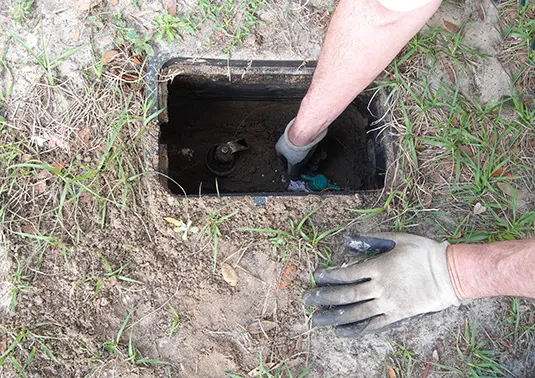
The first step is finding out where your water, power, or gas enters your home. For example, most U.S. houses have their municipal water shutoff valve somewhere in the yard, a foot underground and covered by a small access plate. The valve is often partially buried in dirt and usually requires a special tool or large wrench to turn it, as shown in Figure 1. Even when you know where the valve is and have the right tool, shutting it off in the winter with the valve under a foot of cold water and mud can be challenging (how do I know this?).
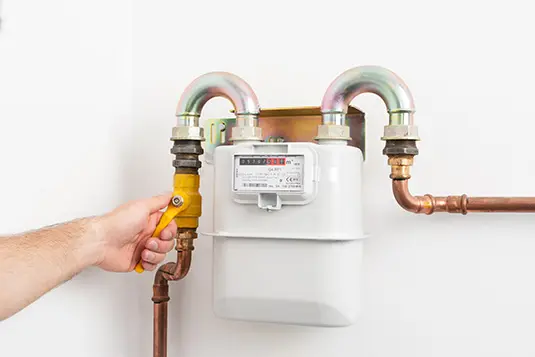
If you have natural gas, it’s even more important to know the location of the gas valve. Many years ago, the tree next to our house was struck by lightning. It jumped from the tree to our house, burned out almost all our electronic devices, and punctured a hole in the natural gas line feeding our fireplace. The gas ignited. I distinctly remember running around the house at night in the rain looking for the gas inlet valve, as shown in Figure 2. Fortunately, I found it.
In addition to your home’s regular circuit breaker panel, homes built after 2020 require an outside power disconnect to allow first responders to shut off power without having to enter your home. It’s important to know where this shutoff breaker is, not only to allow you to isolate your home from the grid but also to be aware of a vulnerability. Without a backup system, anyone can cut off the power to your home. A good exercise is to learn where all these shutoff valves and switches are and determine if any special tools are needed to operate them.
Reading a map
The introduction of the Global Positioning System (GPS) created a revolutionary improvement in navigation. As adoption became universal, it eliminated the need for maps. Fortunately, GPS satellites are immune to almost all natural and human-made disasters with two exceptions. The first is a massive solar flare or coronal mass ejection (CME) like the Carrington Event of 1859. The extreme electromagnetic pulse (EMP) could damage or destroy GPS satellites. The second is a global nuclear war.
However, a more likely disaster scenario is forgetting that your phone is in your back pocket while visiting the restroom. For most of us, that just means paying a large deductible for a new phone. For some, however, the loss of their GPS navigation means being doomed to wander the Earth forever, never able to find their way home ... maybe a slight exaggeration.
I’m not suggesting you should try to navigate to the convenience store using a compass, sextant, and the stars, but having an actual paper map of your local area is a good backup plan. More importantly, figuring out how to use a map and familiarizing yourself with local roads and landmarks could be important during a disaster. By the way, that “North Up” icon in the Apple or Google Maps app … can be duplicated by rotating the paper map on a table using a compass.
Developing people skills
You may be wondering what people skills have to do with disaster preparation. Good people skills are important with or without a disaster, but there are three disaster scenarios where they can be critical.
The first is simply being an effective leader during a disaster for your family or party. Under challenging conditions, having the ability to handle or defuse tense situations in and out of your home is vital.
The second involves the rising domination of Artificial Intelligence in the workforce. The most important skills in the not-too-distant future won’t be technical. AI will eventually be better than humans at every technical skill or job. However, I believe the majority of the population won’t want to be treated, led, or motivated by something that has no human empathy. Great people skills will ensure that you continue to be valuable to organizations and society.
The final reason is to help prevent personal disasters such as relationship problems.
A good place to start is with the realization that not everyone thinks the way you do. Books that explain the different personality types can be extremely helpful and allow you to understand, lead, and motivate others … maybe even a teenage child. They often use systems such as the Myers-Briggs Type Indicator or the simpler DiSC system. A great book to start with is Dale Carnegie’s classic book, How to Win Friends and Influence People — one of the bestselling books in history.
Jump-starting your vehicle
You may be thinking that you have an electric vehicle (EV) and jump-starting is no longer a concern, but EVs also have conventional 12-volt batteries. Rather than powering a starter motor, an EV’s 12-volt battery powers the computer that controls the vehicle’s main high-voltage batteries. Unfortunately, these 12-volt automotive batteries don’t always fail gracefully. Yesterday, they started your vehicle — but today, they’re dead. Most batteries last about four years. Cheap ones may only be good for two or three years. Fortunately, both gas-powered vehicles and EVs can be jump-started. This is one of those times when it’s important to actually read the directions, particularly if you have a luxury car or an EV. Their battery location and procedures are often a bit different.
There are two ways to jump-start a vehicle. The most common is using jumper cables to tap another vehicle’s battery. Once the vehicle is running, the car’s alternator (or inverter for EVs) will provide power until you turn it off. The second option is to buy a small jumper battery. These little lithium-ion battery packs allow you to jump-start your vehicle without tapping another battery. For internal combustion vehicles, the small ones usually have enough power for about two “starts,” so read the directions before attempting. I’ve used them, and they worked very well. They can also be used to recharge phones. Like all lithium batteries, they lose charge over time and should be recharged every few months. I recommend carrying both a jumper battery and conventional jumper cables as backup.
Changing a flat tire
Every vehicle should have a 12-volt tire pump and a can of tire repair sealant, but not every tire can be repaired. If you’ve changed a flat tire before, you can skip this section. If you haven’t, and your car has a spare tire, it’s a good idea to at least pull out the spare tire and jack. First, make sure the spare tire actually has the right amount of air in it. Space saver spares require much higher pressures. Then, try jacking the car up just enough to figure out how the jack works. Automakers include space-saving jacking mechanisms that can even make an engineer scratch their head.
I know that nobody actually reads the vehicle’s owner’s manual, but this would be a good time to try it. If you lost it long ago, you can find it online. Figuring out how your jack works and where to place it so it’s safe and doesn’t damage your car is important. Or learning that you need to loosen the lug nuts before you jack up the car is pretty important, too. Trying to figure all this out during a downpour or in freezing weather is bad enough, but every year, hundreds of people in the U.S. are killed while trying to change their tire on a highway.
Starting a fire
If you’re a guy, there’s a good chance you’ve set more than one thing on fire during your life … maybe even intentionally. There really aren’t that many disaster situations other than wilderness survival that require starting a fire. This book attempts to help you avoid those wilderness survival scenarios, but it’s important to be prepared for any situation.
If caught in the open, fire is very important for heat, cooking, and even defense from animals. There are plenty of books, such as Wilderness Survival For Dummies, and YouTube videos on how to start a fire with nothing but a stick and a rock. Unless you’re going to be on the TV show Naked and Afraid, however, that should never be necessary. Just throw a few lighters into your bug-out bag and keep some around the house and in your car. If you’ve never started a campfire before, grab some marshmallows and try it; it’s a lot of fun. By the way, if you’ve never started a campfire before, you may want to read the next section first.
Putting out a fire
There’s a reason firefighters have to go through extensive training. What works on one type of fire can make things worse on another. In the Navy, it doesn’t matter if you’re an officer, pilot, or captain of the ship; everyone gets firefighting training because there’s nowhere to run when you’re at sea.
There are fire prevention and basic firefighting courses available in person and online, and your local fire department may offer training. Covering types of fires and techniques is beyond the scope of this book, but throwing water on a grease fire can spread the burning grease everywhere. Throwing water on an electrical fire not only won’t extinguish it but might electrocute you, and EV fires present their own unique challenges. Aside from training, make sure you have several fire extinguishers rated to work on any type of fire, as covered in Chapter 10 of Disaster Prepping For Dummies.
Learning basic self-defense
If you’re proficient in martial arts or other types of personal self-defense, you’re good to go, but you may want to teach the basics to family members. If self-defense isn’t one of your areas of expertise, learning basic skills is always a good idea. It can be as simple as learning how to effectively use pepper spray or a stun gun. However, these devices won’t always be available, so it’s also good to learn basic self-defense moves. These include how to break out of a hold or knowing the location of vulnerable areas that can dissuade or disable an attacker.
Even better would be combining self-defense with exercise or sports. This can include anything from kickboxing classes to paintball. If you enjoy competitive sports, martial arts are a great way to improve your physical fitness and discipline. Examples include Karate, Judo, Jiu-Jitsu, and Krav Maga. Self-Defense For Dummies is a great reference.
Building or maintaining your fitness
This is more of a habit than a skill, but it’s essential to being prepared for disasters. Often, the first thought is to get a gym membership. While this is a great start, statistics suggest that at least two-thirds of gym memberships are never or rarely used. The key to beginning a gym fitness program is having a specific goal, such as an upcoming class reunion, and after that, turning it into a habit. To help with that, paying for a trainer is often the best way to get going. Or, have a workout partner to keep you honest.
For many, the monotony of working out in a gym is too much, and they’re better off doing a group activity or playing a sport. The last section covered self-defense disciplines that incorporate physical training, but there are plenty of other fun and interesting options. They depend on several factors, including your interests, life stage, and current health and fitness. Options run the gamut from triathlons to chair yoga, from rugby to pickleball, and from kickboxing to tai chi. The key is to find something that you enjoy doing or at least can tolerate and turn into a habit.
Determining the best vehicles in their category
This cheat sheet covers vehicle categories from motorcycles to diesel trucks and summarizes the pros and cons. An example from each category that received good performance and reliability reviews is used. The vehicles highlighted are good examples, but there are plenty of excellent choices in each category, and you’ll need to do some research to determine your specific needs. All of these vehicles have also been around long enough that used ones are available. This section starts with the least expensive vehicles and moves up from there.
Motorcycles
The least expensive option, motorcycles, can provide emergency transportation, but it depends heavily on how many people are in your party and what type of winter and weather you might face. They excel in maneuverability and escaping traffic jams, but they do so at the cost of zero occupant protection. If you have one that can hit highway speeds, you’re good to go. If you’ve never ridden one, learning how during a disaster . . . would be a disaster. Motorcycles particularly suited for disaster or evacuation situations are in the Adventure Bike category, which are designed for both highway and off-road use.
A good example is the Honda NX500. It’s very reliable, can carry two people, achieve freeway speeds, does 0-to-60 in under 6 seconds, and can get through areas that would stop 95 percent of other vehicles. It does all this while getting about 65 miles per gallon, which beats the best hybrid cars. It has a highway range of about 300 miles (480 kilometers), but with a couple of 2-gallon (about 8 liters) cans on the back, it can achieve a range of more than 500 miles (800 kilometers).
The Honda NX500 is also A2 license–legal in Europe. New ones go for around $7,500, but there are plenty of used ones available (formerly called the CB500X). While the NX500 is a good balance of power, efficiency, and reliability, there are excellent motorcycles in this category from Yamaha, Kawasaki, Suzuki, BMW, and KTM. A motorcycle isn’t going to work if you live in or need to transit an area with harsh winters or extreme weather. Therefore, motorcycles should usually be considered an emergency backup.
SUVs
For disaster and evacuation purposes, it’s best to choose the smallest SUV that accommodates your needs. Not only do they get better mileage, but they’re lighter and more maneuverable. All the SUVs below have hybrid and all-wheel drive (AWD) options. Hybrids not only provide excellent mileage, but they also generally have better performance, and despite the additional complexity, most score very well in reliability.
- Subcompact SUVs: The Subaru Crosstrek is one of the least expensive all-wheel drive SUVs. It gets good mileage and range, is very reliable, and Consumer Reports ranked it best in class. It may not be sexy, but it does everything well. They’ve been around for a while, so there are many used ones available. Other good options in this class are the Toyota Corolla Cross Hybrid, Honda HRV, Chevy Trailblazer, and Mazda CX-30.
- Compact SUVs: Subaru strikes again with the Forrester, along with the Toyota RAV4, Honda CRV, Hyundai Tucson, and Mazda CX-50.
- Mid-sized SUVs: If greater cargo or passenger capacity is required, the Subaru Outback, Hyundai Santa Fe, Toyota Highlander, and Honda Pilot have best-in-class reviews.
- Large SUVs: These are the gas guzzlers, but if you need the cargo capacity, the Chevy Suburban, Toyota Land Cruiser, and GMC Yukon XL might fit the bill.
Vans
Minivans may not be sexy, but they do have exceptional utility. The Toyota Sienna and Chrysler Pacifica are among the few minivans that have all-wheel drive as an option. Cargo vans such as the Ford Transit, Mercedes Sprinter, and Ram Promaster/Fiat Ducato can be a good option, particularly as camper vans covered in Chapter 21 of Disaster Prepping For Dummies.
Pickup trucks
Surveys show that very few pickup trucks are used to haul anything but their occupants. Full-sized pickup trucks are rare outside the U.S., Canada, and Australia. Mid-sized and smaller are a bit more common. As with SUVs, all-wheel drive is desirable along with a crew cab to carry more people.
The drawback of trucks is terrible mileage, but there are exceptions. Truck purists often overlook the Ford Maverick because it’s built like an SUV with a unibody, not a body-on-frame. That reduces hauling capability but makes it lighter and more fuel efficient. It can also be ordered as a four-wheel drive hybrid. With much of the utility of a full-sized 4x4 pickup truck, it gets twice the mileage and costs a lot less. For those who need significant hauling power, the other end of the spectrum is a full-sized diesel pickup truck. The diesel’s high-torque engine may be required if you’re pulling a very large travel trailer. Diesels also get better mileage than gasoline, often doing better than even the hybrid gasoline trucks. Although more expensive to purchase and operate, if you need these capabilities, stepping up to a four-wheel drive, club cab, diesel is a good option. Do your research, particularly regarding reliability.
Electric vehicles (EVs)
As covered in the EV versus gas comparison, ICE vehicles have the advantage in most disaster or evacuation situations. The exception is if you have a solar array or other independent power source at your home and/or at your survival retreat location. With the ability to charge an EV without the grid, EVs not only make sense but would be preferred.
SUV EV
For a mid-sized SUV, the Tesla Model Y Long Range, all-wheel drive version is a good option. It’s currently the most efficient EV SUV and is ranked as one of the safest cars ever tested by NTHSA, IIHS, and EuroNCAP. It also has access to the largest charging network. After a couple of years as the bestselling car in the world, there is a growing number of used ones available.
The Tesla Model Y Long Range also has a unique feature called Bioweapons Defense Mode (I’m not making this up), which pressurizes the interior with filtered air using a massive HEPA filter that removes 99.97 percent of particulates down to 0.3 microns, including smoke and bacteria. It was reported as very effective during California’s wildfires. You can also buy a custom-made inflatable mattress that fits in the back, allowing two people to sleep. Unlike an ICE vehicle, the “engine” doesn’t have to run to power the air conditioner or heat pump.
Truck EV
As above, it also requires access to solar charging at your home or survival destination to make sense. The best example of an EV truck for a disaster or evacuation scenario requires setting aside not only social and political but possibly aesthetic considerations as well. With these caveats, the Tesla Cybertruck objectively has the best specifications and features for a disaster or evacuation vehicle. The all-wheel drive variant can carry five passengers, 2,500 pounds of cargo, and has four-wheel steering, making it very maneuverable off-road and in the city.
Its heavy stainless-steel exterior makes the body bulletproof to most pistol rounds, and its air suspension gives 17 inches of ground clearance. With no engine to ingest water or ash, it can cross two feet of water by pressurizing its battery compartment.
The Cybertruck also has “Bioweapon Defense Mode” to protect from smoke, fumes, radioactive particles, bacteria, and some viruses. Finally, it comes with bidirectional charging, allowing it to be a house backup battery. The downside is that it’s an EV with limited range. It does, however, have a large cargo bed that could carry quite a few portable solar panels.
Three other more conventional EV trucks that should also be considered are the Ford Lightning (recently discontinued), the Chevrolet Silverado EV, and the Rivian. The Chevrolet Silverado EV, in particular, can be optioned with a class-leading range of almost 500 miles (800 km).
Summarizing vehicle categories
Table 1 assumes that all the example vehicles are all-wheel drive versions and either hybrid or diesel. For the EVs, it’s assumed that you have a way to charge them at your home and/or at a survival destination when the power grid is down.
Summarizing vehicle performance for disaster preparation and evacuation by category
* EV score assumes the ability to charge at home and at a survival destination
Adding a bonus vehicle
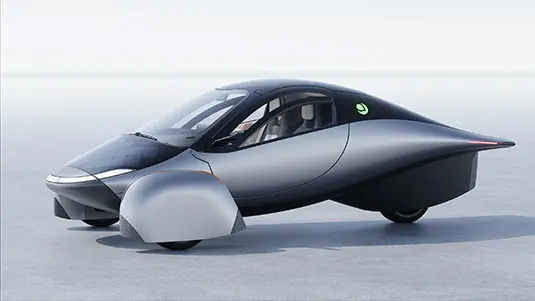
The soon-to-be-produced Aptera, as shown in Figure 3, doesn’t fit any category. It carries only two people but is covered in solar cells. With its light weight, extreme aerodynamics, and three wheels, it’s incredibly efficient. Under perfect conditions, the sun adds up to 40 miles (65 km) of range a day. Even if it does half that, it achieves something no other vehicle can; it charges itself. It can be ordered with batteries that give it a range of up to 1,000 miles (1,600 km), and it can also be ordered with three-wheel drive and additional ground clearance. The hatchback design is big enough that a camping tent attachment turns the cargo bay into a bed.
About This Article
This article can be found in the category:
Hot off the press
Explore Related content