10 Mistakes Beginner Hikers Make


The most common beginner hiking mistakes include poor planning, bringing untested gear, overpacking, not drinking enough water, and ignoring the weather. Avoiding these mistakes comes down to preparation, paying attention on the trail, and learning from each outing.
We've all been beginners at one time or another, and we've all made mistakes. From overpacking to skimping on water to forgetting to check the weather forecast before setting out — the list of hiking and backpacking blunders is longer than a customer service hold that keeps assuring you, "Your call is important to us." When it comes to mishaps in the woods the important thing is to learn from them. Take note of what went wrong and then make the necessary adjustments to lessen the chances of it happening again. In that regard the wilderness is no different than urban environments — we often learn more from our slips than our successes. Listed here are ten of the most common hiking mistakes, along with some tips and tricks on how to avoid and/or address them.
Why does poor planning cause hiking mistakes?
Poor planning is the root of many, if not most, hiking mistakes. Common examples include, getting lost, running out of food, untested footwear, missing permits, overlooked regulations, water sources that turn out to be dry, and freezing your butt off because you didn’t bring the right layers. All these scenarios can put a damper on your trip and potentially put you and your group in danger.
By equipping yourself with the necessary knowledge before setting out, you improve your chances of successfully dealing with whatever curveballs Mother Nature may throw your way. Does this mean you have to leave spontaneity at the trailhead? Not at all. Strive to find a balance. Thorough planning enables you to enjoy the dual benefits of reduced worry and more free time once you’re out in the woods. These extra moments can be spent swimming, reading, listening, observing, or taking side trips to nearby waterfalls and scenic summits.
Why should you test hiking gear before a trip?
Becoming familiar with your gear before a hiking trip is essential. It enables you to understand how each piece of gear works and addresses any potential issues sooner rather than later. The risks of not doing so include:
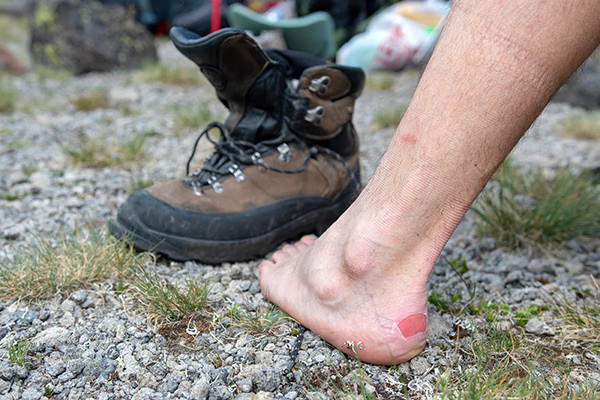
- A new pair of hiking shoes that leaves your feet more blistered than a roll of bubble wrap
- Arriving at camp with a storm approaching, only to realize that setting up your tent isn’t as straightforward as you imagined
- An overrated (temperature-wise) sleeping bag that leaves you shivering when conditions are colder than expected
- A backpacking stove that either fails to work or is difficult to fire up when you’re ready to cook a much-anticipated meal
All these scenarios can be avoided by getting acquainted with your kit before setting out. For example, take your shoes or boots for multiple trial runs on nearby trails, pitch your shelter in the backyard, and cook a meal with your stove to familiarize yourself with its operation.
What does "packing your fears" mean?
“Packing your fears” is a common saying within the hiking community. It refers to the tendency to bring more gear than necessary due to anxieties such as being too cold, running out of food, and safety concerns. Carrying extra weight can result in decreased balance, excessive fatigue, and unnecessary strain on your muscles and joints. Moreover, hiking is much less enjoyable when you’re lugging the proverbial kitchen sink on your back.
How to avoid overpacking? Start with research — get a good handle on the conditions you’re likely to face. Secondly, based on this research and your individual needs, pack intentionally, focusing on the necessities. Thirdly, create a checklist to ensure you have everything you need for a safe and comfortable experience.
How much water should you drink while hiking?
In hot weather, drink about one quart (one liter) of water per hour; in milder conditions, you typically only need about half that amount. Staying well-hydrated is essential for maintaining your energy levels, regulating body temperature, and ensuring overall well-being while hiking. Not drinking enough water is one of the most common — and potentially serious — mistakes made by hikers and backpackers. To reduce the risk of dehydration on the trail, consider the following tips:
- How much? In hot weather, it’s generally recommended to drink one quart (one liter) of water per hour. In milder conditions, you typically only need about half that amount.
- Small and often: Just as with food, your body processes small amounts of water more easily when consumed regularly throughout the day. Aim to drink a little water every thirty minutes rather than chugging a quart every couple of hours.
- Accessibility: Regular hydration is much simpler when your water bottles are easily reachable. Keep them in the shoulder or side pockets of your backpack. For the ultimate in accessibility, some hikers prefer a water bladder with an attached hose that’s connected to their shoulder strap.
- Purification: While it may be inconvenient and time-consuming, purifying water is crucial for preventing waterborne illnesses caused by bacteria, parasites, and viruses. Spending an extra 20 to 30 minutes filtering water is far better than suffering through multiple days of diarrhea, abdominal cramps, bloating, and nausea.
How do you avoid getting lost on the trail?
To avoid straying off course, always carry a means of navigation, know how to use it, and pay close attention to your surroundings. Most beginner hikers stick to well-established trails. However, even frequently travelled pathways can sometimes be challenging to follow. From snow cover to fallen trees to unmarked junctions — it's easy for folks to stray off course. The repercussions of doing so range from a minor inconvenience to having to send out a distress signal to Search and Rescue.
Three points to remember:
- Electronics: If you’re using a GPS app on your phone, be sure to download the maps for offline use before starting your hike. Additionally, make sure your phone is fully charged beforehand and/or carry a power bank and the appropriate cord to recharge along the trail.
- Old school: If you’re going to carry a map and compass, know how to use them. Navigational instruments are as useful as a chocolate teapot if you cannot make heads or tails of them when it really matters.
- The importance of paying attention: The key to being a proficient navigator is paying attention. I estimate that 70 percent of navigational proficiency comes down to this one simple principle. Establishing the habit of keeping track of your location at all times means regularly correlating what you see on the map with what you see on the ground. Quite often, folks stray off course when they’re chatting with other hikers, listening to music on their headphones, or inadvertently overlooking topographical landmarks.
Why is checking the weather so important for hikers?
Ignoring or underestimating the weather can put you and your group at risk, because mountain conditions can change from idyllic to dangerous faster than a backtracking politician. For example, in Yosemite National Park, it's estimated that 17 percent of hiker rescues are due to inclement conditions.
In the week leading up to your hiking trip, staying abreast of what’s happening with the weather is crucial (and packing and planning accordingly). The ante is raised even higher for multiday trips, when the likelihood of climatic variations is higher. For on-the-trail updates, consider using a satellite communication device such as a Garmin inReach, which enables you to request and receive current weather forecasts via satellite.
What are the Leave No Trace principles for hikers?
Leave No Trace (LNT) principles are about minimizing your impact on the environment through two key elements: recognition and stewardship. The former starts with understanding the impact our actions — individually and collectively — have on the environment. The latter involves a diligent commitment to care for the natural world.
Next time you’re hiking and backpacking, consider these simple ways to help preserve our natural areas:
- When you see a piece of trash along the trail and think “someone should pick that up,” consider the possibility that that someone is you.
- When you’re tired and eager to reach camp, think twice before cutting a switchback to save a few minutes. Consider the environment impact of such a shortcut, including trampled vegetation, soil erosion, and altered hydrology.
- When the sun’s beating down and you reach a crystal-clear lake, take a moment to wash the sunscreen off your person before diving in for a regenerating swim.
- When you’re busting to go to the toilet, make the effort to head 200 feet/61 meters off the trail, dig a proper cathole, and pack out your used TP. Going just a few yards off the path, and covering your deposit and used TP with a rock and a few sticks doesn’t cut it environmentally, aesthetically, or karmically!
How do you prevent blisters and chafing while hiking?
Stop and treat any hotspot the moment you feel it, since blisters and chafing only get worse the longer you ignore them. Two of the most common hiking maladies are blisters and chafing. Whenever you feel a hotspot or tingle in areas such as your heels, toes, and inner thighs, stop and attend to it immediately. Without attention, these sensations will only increase, and within a couple of hours, the tingle may turn into a nagging skin condition. While the unwelcome appearance of blisters and chafe may not signal an early end to your hiking trip, at the very least, they can put a dampener on how much you enjoy the experience.
How do you avoid common camping mistakes?
Waking up in a pool of water during a rainstorm and having your food bag broken into by voracious critters, are two of the most common tales of campsite woe. Thankfully, such mishaps are 95 percent preventable, if you remember the following points:
- Not all flat campsites are created equal. To avoid getting flooded out by nighttime rains, avoid setting up in topographical low points such as a hollows, gullies, or washes. Before pitching your shelter, ask yourself the following question: “Where the water will go if it rains?”
- Having your food stores broken into is not only bad for you and your group, but more importantly, it has a negative impact on wildlife. It affects their foraging habits and quickly teaches them to associate humans/campsites with a potentially easy meal. To avoid such a scenario, always adhere to food storage regulations such as bear canisters, bear boxes, or hanging your food.
What does "hike your own hike" mean?
“Hiking your own hike” means enjoying the hiking and backpacking experience on your own terms, rather than trying to adhere to someone else’s plans, style, or expectations. It serves as a reminder that to make the most of your time outdoors, you should hike in a way and at a pace that is most enjoyable for you.
Sounds great, no? Unfortunately, for many folks, “hiking your own hike” is a lot easier in theory than in practice. This is especially true when it comes to large groups, consisting of individuals with varying levels of hiking fitness, experience, goals, and motivations.
To avoid “hiking someone else’s hike,” keep the following points in mind:
- What’s your motivation? If you like to hike fast, hike fast. If you enjoy regularly stopping to identify plants and fungi, do that. And if you prefer lazy mornings and relaxing afternoons in camp, bring a book and a hammock! Don’t feel pressured to hike in a way that doesn’t feel right for you. Doing so can lead to frustration for everyone involved.
- In some cases, this may mean hiking by yourself. In other situations, it may be hiking with people who share your style. There isn’t a one-size-fits-all approach to having fun in the woods.
- If you prefer to hike in a group, ensure that everyone understands the trip goals before setting off. When expectations are clear from the start, it reduces (though it won’t eliminate) the chances of complaints such as “this wasn’t what I signed up for.”
Frequently asked questions
What should a beginner hiker bring on a day hike?
A beginner should bring water, navigation (a charged phone with offline maps or a map and compass), extra layers, food or snacks, sun protection, and a basic first aid kit. Packing intentionally based on the expected conditions helps you avoid both overpacking and leaving out essentials.
How do beginners get in shape for hiking?
Start with shorter, easier trails and gradually increase distance and elevation as your fitness improves. Walking regularly, taking the stairs, and doing your trial gear runs on local trails all help build the stamina you'll need for longer hikes.
What is the most common mistake beginner hikers make?
Poor planning is the most common mistake, since it leads to many other problems like getting lost, running out of food or water, and being unprepared for the weather. Spending time to research your route, check the forecast, and create a gear checklist prevents the majority of beginner blunders.
About This Article
This article can be found in the category:
Hot off the press
Explore Related content