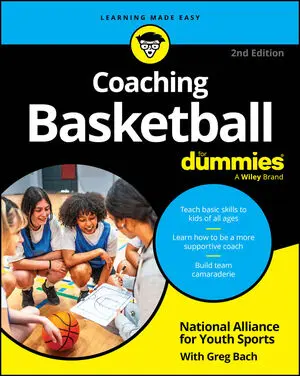
Coaching Basketball For Dummies

Overview

Level-up your basketball coaching skills with this practical collection of drills, advice, and tips

Looking for an easy-to-read and fun guide to teaching basketball that will help you keep your players engaged, learning, and having a blast?

Coaching Basketball For Dummies delivers proven, practical explanations and tips – including basic drills, strategies for safely dealing with player injuries, maintaining player engagement, and running an effective practice – for coaching basketball teams at a variety of age levels.

You’ll find useful techniques on everything from planning and managing practices, supporting the mental health of your young players, and how to help individual team members recover from shooting slumps and rough patches in their play.

The book also includes:

  • Powerful tips for improving basketball fundamentals in players of all ages
  • Exercises and advice to help you become a more supportive coach
  • Techniques to build camaraderie and trust amongst your players and between you and your team

Perfect for beginning youth basketball coaches, with a particular focus on people coaching kids between the ages of 5 and 16, Coaching Basketball For Dummies is also a can’t-miss strategy guide for experienced coaches interested in picking up some proven, hands-on tips to improve their coaching skills.

Read More

About The Author

National Alliance for Youth Sports (NAYS) educates, equips, and empowers youth sports leaders, program administrators, volunteer coaches, and parents through a variety of trainings, programs, and resources so all children can enjoy the lifelong benefits of sports.
Greg Bach
is Senior Director of Communication & Content for NAYS.

coaching basketball for dummies

CHEAT SHEET

Being a basketball coach involves always being prepared for practice and running a practice that’s fun and productive. An effective coach keeps players motivated and builds both individual and team confidence. Know what to say and how to say it before, during, and after a basketball game to impact the performance and morale of your players.

HAVE THIS BOOK?

Articles from
the book

Playing basketball requires a broad range of skills. As a coach, being able to assess a youngster's strengths and weaknesses is crucial for determining where they best fit in your lineup. Your early practices should offer a peek at a player's ability in specific areas. Scrimmages or games involving just a handful of players and drills are ideal ways to gain a real sense of a child's strengths and weaknesses in certain basketball skills.
Your job as a basketball coach is to be supportive and enthusiastic, always praising and encouraging your team to build their confidence. Self-confidence is a gift that lasts for years and impacts how kids approach life away from the basketball court. Use these coaching tips for boosting players’ confidence: When providing feedback, use the “sandwich” method: Place a critical remark between two encouraging comments.
Being a basketball coach involves always being prepared for practice and running a practice that’s fun and productive. An effective coach keeps players motivated and builds both individual and team confidence. Know what to say and how to say it before, during, and after a basketball game to impact the performance and morale of your players.
As a basketball coach, you need to inspire your players to give their best effort during every game of the season. Keep these tips in mind when talking to your team before, during, and after a basketball game to keep the team focused, having fun, and playing hard: How to Deliver the Pre-Game Talk Speak in a calm and relaxed manner with a smile on your face.
A ball hog — a player who hangs on to the ball for extended periods of time and always looks to shoot rather than pass — creates real problems for the entire team. For instance, a ball hog ignores open teammates who have worked to get into position to score, which undermines team morale and kills your sense of unity.
To motivate your basketball players to give their best efforts, not get discouraged, and strive to become the best they can be on the court, use these coaching tips: Continually encourage players to do their best on both ends of the floor — regardless of the score. Stay in control of your emotions, and refrain from yelling instructions all the time.
As a youth basketball coach, teaching kids the importance of good sportsmanship can be challenging. What makes teaching (and modeling) good sportsmanship particularly tricky is that youngsters are bombarded with images of older basketball players trash talking, showboating, and disrespecting opponents and officials.
Showing up prepared for basketball practice is the most basic element of having a successful practice and one of your requirements as coach. You expect your players to come to practice prepared, so your kids deserve the same from you. The following list focuses on things you need to bring to practice: A practice plan with drills broken down by time segments.
One goal as coach is to keep your basketball practices fun while maximizing time with your players. You can accomplish this by running practices that continually challenge, entertain, and motivate your kids while developing skills. To enhance your players’ enjoyment of basketball and have fun at practice, try these tips: Give each child plenty of repetitions.
As a basketball coach, what you say to your players before tip-off — and how you say it — can have a big impact on how they play the game. Here are some ideas about what to say to your team before a game to set the tone for a fun day of basketball. One of the worst discussions you can have with kids before a game is talking about the opponent's win-loss record.
https://cdn.prod.website-files.com/6630d85d73068bc09c7c436c/69195ee32d5c606051d9f433_4.%20All%20For%20You.mp3

Frequently Asked Questions

No items found.


