|
Published:
May 31, 2016

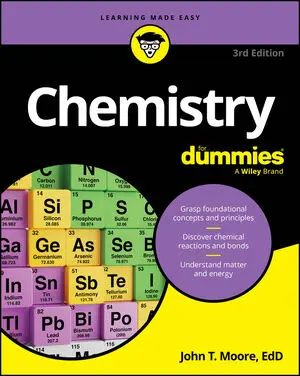
Chemistry For Dummies

Overview

Chemistry For Dummies, 2nd Edition (9781119293460) was previously published as Chemistry For Dummies, 2nd Edition (9781118007303). While this version features a new Dummies cover and design, the content is the same as the prior release and should not be considered a new or updated product.


See how chemistry works in everything from soaps to medicines to petroleum

We're all natural born chemists. Every time we cook, clean, take a shower, drive a car, use a solvent (such as nail polish remover), or perform any of the countless everyday activities that involve complex chemical reactions we're doing chemistry! So why do so many of us desperately resist learning chemistry when we're young?

Now there's a fun, easy way to learn basic chemistry. Whether you're studying chemistry in school and you're looking for a little help making sense of what's being taught in class, or you're just into learning new things, Chemistry For Dummies gets you rolling with all the basics of matter and energy, atoms and molecules, acids and bases, and much more!

  • Tracks a typical chemistry course, giving you step-by-step lessons you can easily grasp
  • Packed with basic chemistry principles and time-saving tips from chemistry professors
  • Real-world examples provide everyday context for complicated topics

Full of modern, relevant examples and updated to mirror current teaching methods and classroom protocols, Chemistry For Dummies puts you on the fast-track to mastering the basics of chemistry.

Read More

About The Author

John T. Moore, EdD, is regents professor of Chemistry at Stephen F. Austin State University, where he is also the director of the Teaching Excellence Center. He is the coauthor of Biochemistry For Dummies and Organic Chemistry II For Dummies.

Sample Chapters

chemistry for dummies

CHEAT SHEET

During the first year of high school chemistry or the first semester of college chemistry, all the terms, units of measurement, and atoms, molecules, elements, and compounds may seem a bit overwhelming. The good news: Your Chem I class doesn't have to be torture. This handy Cheat Sheet provides some basic information you can refer to regularly to make your chemistry class just a tiny bit easier.

HAVE THIS BOOK?

Articles from
the book

During the first year of high school chemistry or the first semester of college chemistry, all the terms, units of measurement, and atoms, molecules, elements, and compounds may seem a bit overwhelming. The good news: Your Chem I class doesn't have to be torture. This handy Cheat Sheet provides some basic information you can refer to regularly to make your chemistry class just a tiny bit easier.
By calculating the enthalpy change in a chemical reaction, you can determine whether the reaction is endothermic or exothermic. Chemical reactions transform both matter and energy. Though chemical equations usually list only the matter components of a reaction, you can also consider heat energy as a reactant or product.
https://cdn.prod.website-files.com/6630d85d73068bc09c7c436c/69195ee32d5c606051d9f433_4.%20All%20For%20You.mp3

Frequently Asked Questions

No items found.