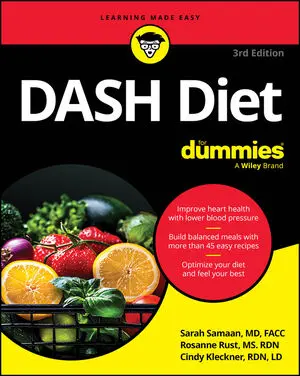
DASH Diet For Dummies Cheat Sheet


The DASH diet (Dietary Approaches to Stop Hypertension) is a scientifically proven eating plan that lowers high blood pressure by increasing fruits, vegetables, whole grains, and low-fat dairy while cutting sodium and saturated fats. This cheat sheet breaks down daily serving guidelines, heart-healthy lifestyle tips, and how to make DASH work for the whole family.
The DASH diet has been scientifically proven to reduce hypertension (high blood pressure) without any adverse side effects (in fact, with some positive side benefits!). Of course, to reduce hypertension for the long haul and maximize your health impact, you need to adopt consistent eating habits, choose the right foods, and make several small lifestyle changes.

DASH diet nutrition basics
The Dietary Approaches to Stop Hypertension (DASH) eating plan isn’t hard to follow and is adaptable to your food preferences.
Note: These servings are based on a 1,500 to 2,200-calorie-per-day diet, but you may need to consume more calories per day depending on your age, gender, and activity level. Check with your dietitian or use this body weight planner for an estimate of your daily calorie needs to maintain, gain, or lose weight.
The following list provides the types of food the diet recommends you eat, along with the number of servings per day:
- Grains (5 to 8 daily servings), preferably whole: Examples of 1 serving of grains include 1 slice of bread, 1 cup of dry cereal, or ½ cup cooked cereal, pasta, rice, barley, or other grain. Look for the word whole — don’t assume that any brown-colored “wheat” bread is a great choice. Read further and check the Nutrition Facts label, the list of ingredients, and the fiber content. Look for whole-wheat flour or another whole-grain flour as the first ingredient. Also, seek out grain products with 2 or more grams of fiber per serving. Venture out of your comfort zone and try brown and wild rice, barley, bulgur, quinoa, or whole-wheat couscous.
- Fruits (3 to 5 daily servings): A serving of fruit may be a small to medium piece of fruit, 10 grapes, ½ grapefruit, ½ banana, or 2 tablespoons of raisins or other dried fruit. Find new ways to add more fruit to your meals: Top salads with sliced strawberries or apples and add raisins or blueberries to oatmeal. Make fruit your daily go-to choice for snacking, too.
- Vegetables (4 to 5 daily servings): A serving of vegetables comprises 1 cup of raw veggies or ½ cup cooked. If you think eating 4 to 5 servings of vegetables every day is difficult, try adding more vegetables to sandwiches: Spinach leaves, green peppers, sliced tomatoes, and sprouts are all excellent sandwich toppers. If you’re tired of the bland taste of boiled vegetables, give grilling a chance. Grill zucchini, portobello mushrooms, eggplant, peppers, and Vidalia onions to really turn up the volume on vegetable flavor.
- Lowfat or nonfat dairy (2 to 3 daily servings): Limit your milk to skim or 1% and primarily eat lowfat yogurt and cheeses. To meet your 2 to 3 servings goal, drink two 1-cup servings of skim or 1% milk daily. Or, as 1 serving, have a snack of 6 ounces of low-fat Greek yogurt or a ½ cup lowfat cottage cheese. Eating 1 ounce of low-fat or nonfat cheese also counts as a serving. To cut the fat even more, use nonfat plain yogurt in place of sour cream in your recipes.
- Lean meats, fish, and poultry (2 or fewer daily servings): Limit the total amount to no more than 6 to 8 ounces daily. Examples of the recommended foods in this category include fresh chicken breast or legs, fresh turkey breast, loin cuts of beef, sirloin, round steak, extra-lean ground beef, pork loin roast, pork tenderloin, fresh fish, shellfish, and low-sodium canned tuna.
- Nuts, seeds, beans, and legumes (4 to 5 weekly servings): Even though nuts and seeds provide good fats, they have a lot of calories. Be sure to only add small amounts of nuts or seeds to your salads or stir-fries to meet your goal of getting 4 to 5 servings of nuts and seeds per week. A healthy serving size of unsalted seeds, such as sunflower seeds, is 2 tablespoons. A serving of nuts is about ¼ cup (make sure they’re unsalted) or 2 tablespoons of nut butter (like peanut or almond). Incorporating ½ cup of beans several times a week to your meals adds protein and an excellent source of fiber to your diet.
- Healthy fats (3 to 5 daily servings): Oils providing monounsaturated fats include olive, peanut, avocado, and canola oils. Despite misinformation you may see on social media, vegetable oils such as soybean or corn oil provide an essential amino acid (linoleic acid) that is fine in moderation, too. Canola and soybean oils are great for cooking due to their neutral flavor as well. Some foods that feature healthy fats include avocados, nuts, olives, seeds, vinaigrette salad dressings, spread margarines (look for less than 2 grams of saturated fat per serving), natural nut butters, and recipes that include the healthy oils listed here. Generally, 1 teaspoon of oil or 1 tablespoon of salad dressing is a 1-serving equivalent. Check the Nutrition Facts label to determine the serving size for food products under this umbrella.
- Sweets (1 or fewer daily servings — according to the actual serving size): You don’t actually need these foods, so you shouldn’t consume them daily — this allotment is solely for pleasure. Some sweets may be purely sugar (think soda or gummy candies) and others may be high in both saturated fat and sugar (think doughnuts, cookies, cakes, rich desserts, and candy bars). Make sure you read the label of whatever goodie you’re indulging in and note the serving size information so that you consciously eat just 1 serving on occasion (instead of eating 5 servings by accident). Examples of servings of fats and sweets include a 2-inch-square brownie, a small donut, a miniature candy bar, 2 small cookies, 1 small muffin, 1 small piece of pie or cake, and 8 ounces of lemonade, sweetened tea, flavored iced coffee, soda, or another sugary beverage.
15 heart-healthy lifestyle changes
When you’re battling hypertension, the solution doesn’t involve just one factor. Sure, reducing your salt intake or hitting the gym can help, but you’ll have more success controlling hypertension and improving your health if you create a more balanced, healthier lifestyle overall. Here are 15 tips and tricks to make lifestyle changes that can help you work toward a healthier heart and life:
- Think about what you can add to your diet. Keep cut carrots, bell pepper strips, cucumber slices, grape tomatoes, and celery sticks on hand for a quick snack to meet your daily vegetable intake.
- Replace salt in recipes with flavorful herbs and spices, add lemon zest, or use half the salt. Also, remove the saltshaker from the table.
- Skip the salty snacks or measure out a 1-ounce portion. Or satisfy your salt craving with a small portion of nuts mixed with dried fruit instead.
- Drink more water every day and limit sweetened beverages and alcohol. Save sodas and sugary coffee drinks for occasional treats, less than once a week. Alcohol should be consumed in moderation (less than 1 to 2 drinks per day) or not at all.
- Don’t overconsume beverages sweetened with low or no-calorie sweeteners either. While observational, some studies have associated them with having a negative impact on your health — and they aren’t contributing any nutrition.
- Eat less dessert and fewer sweetened baked goods. When you do indulge, eat smaller portions. Enjoy a yogurt or a small scoop of ice cream topped with sliced banana, peaches or berries.
- Consider keeping a food journal or using an app to record your food intake and exercise. Setting goals and writing them down helps you stay on track.
- Monitor your daily stress. If things are weighing on you, think about ways you can manage your stressors. Find ways to build some quiet time into your day.
- Get more physically active and fit. Check with your doctor about any restrictions on exercise. Choose physical activities that you enjoy and don’t try to do too much too soon. Even if you only have 10 minutes to work out, use those 10 minutes, because every few minutes count. Eventually, you can work your way up to at least 30 minutes of vigorous activity four to five times a week.
- Build some muscle. You don’t have to be a bodybuilder to reap the benefits of strength training. Start with small dumbbell weights or do body weight exercises like squats, lunges, push-up, and abdominal crunches.
- Create an exercise plan and stick to it, enlisting the companionship of a friend, exercise partner, or personal trainer. Try working out in the morning — studies show that morning workouts are more consistent and, therefore, offer more success. Think about it: In the morning, fewer obstacles can get in the way of your busy life. Consider wearing a fitness tracker, setting move goals and aiming for increasing your daily steps (7,000 to 8,000 steps a day). To get there, use the stairs more often, get up and move around, and park your car farther away to encourage more daily steps — especially if your job is sedentary.
- Discuss cardiovascular risks, including blood pressure, with your doctor and mention that you’re following the DASH diet. Ask your doctor how your blood cholesterol is doing and whether that needs some work, too. Good news: DASH helps in that area as well.
- Take any prescribed medications exactly as directed.
- Strive to maintain a healthy weight. Talk to your doctor or a dietitian for more on what an optimal body weight for you should be.
- Quit smoking — and if you’re not a smoker, don’t start!
Make DASH a family affair
DASH isn’t just for adults concerned about high blood pressure. It’s healthy, balanced nutrition for children and teenagers, too. Why talk about DASH and kids? Consider the fact that since the 1970s, American children between the ages of 6 and 11 are now consuming
- Triple the amount of salty snacks
- Nearly double the amount of candy
- More than 40 percent fewer vegetables
- Half the amount of milk
- Twice the amount of soda
Given these statistics, it’s not surprising that more than one-third of U.S. kids have overweight or obesity. This puts them at risk for developing a condition known as metabolic syndrome. Metabolic syndrome is a combination of risk factors that raise the risk of heart disease, stroke, and diabetes:
- Large waist size
- High blood pressure
- High triglycerides and low HDL (“good”) cholesterol
- Elevated blood sugar and insulin levels
In other words, kids with metabolic syndrome are more likely to face serious health problems as adults. The good news is that the DASH diet can help kids that are heading down this road. In one British study, girls with metabolic syndrome who followed the DASH diet for just six weeks saw improvements in both blood pressure and insulin levels compared to those who didn’t. Another long-term study of young girls found that those who regularly ate at least two servings of dairy plus three servings of fruits and vegetables each day were about one-third less likely to develop high blood pressure by their late teens.
DASH keeps it simple by giving you a structure that you can follow to put together nourishing and delicious meals. Parents play a key role in shaping healthy eating habits for kids:
- Offer nutritious foods at snack time that fill nutrient gaps. Instead of chips or other salty snacks, slice veggies into fun shapes (or use a crinkle cutter) and add a healthy dip to make them tastier and fun for children.
- Serve fruit cut into slices or chunks or offer orange wedges after school. Sure, a fruit bowl on the counter is nice, but making nutrition easier works.
- Include dairy. Dairy foods provide calcium, vitamin D, phosphorous and protein. Serve a glass of milk with meals instead of sugary drinks. Include a small yogurt cup with lunch or let have a make-your-own yogurt parfait bar on the weekends.
- Teens bodies are still growing, and they need the nutrients in milk. But they may be under the impression that “milk is for kids.” Work milk into their diets in more teen-friendly ways by offering options such as an iced lattes or a high protein smoothie. Consider the vessel too – a glam glass with a wooden lid that has a built in straw can make drinking milk cool again.
Why reducing salt is important
Although it’s true that there are a few studies that haven’t found a link between sodium and high blood pressure, the body of evidence spanning more than 50 years with more than 250,000 participants shows a strong, stepwise relationship between salt intake and blood pressure.
If dense scientific research feels hard to wade through, consider this:
- In the few remaining societies untouched by modern life, without grocery stores, mini-marts, or fast food, hypertension is rare, even in old age. There are many reasons for this, of course, but one key factor appears to be their naturally low-salt, high-potassium diets, rooted quite literally in the earth.
- It doesn’t take a big change to make a difference. An analysis by the World Health Organization (WHO) estimates that by simply cutting average salt consumption around the globe by 15 percent, more than 8.5 million lives would be saved over the next 10 years. That’s a hard statistic to argue with.
- The average American diet includes about 3,400 milligrams of salt daily. Cutting this amount by 15 percent would get salt intake down to about 2,900 milligrams daily. While that’s still pretty high, it’s a start. For optimum health, the Centers for Disease Control and Prevention (CDC) recommends no more than 2,300 milligrams for most people age 50 and under.
- Some people are salt sensitive: Those older than 50, Black Americans of any age, and people with hypertension, diabetes, or congestive heart failure. This group should ultimately aim for a 1,500-milligram sodium limit daily.
- The CDC also encourages people with obesity to lower their salt intake, because excess weight can heighten salt sensitivity and fluid retention.
About This Article
This article can be found in the category:
Hot off the press
Explore Related content