
Two Designs for Shady Container Gardens
A common lament is that nothing will grow under trees. That’s not entirely true, though. It’s true that tree roots growing near the soil surface can outcompete smaller plants for water and nutrients, and a shady spot does limit the selection of plants. Instead of struggling to grow shade-loving plants in the ground, why not set a few containers of plants under the tree?
Fantastic foliage
If you think green when you think leaves, this container will be a treat. These plants have striking foliage in a range of colors and patterns to rival the most eye-catching flowers. The combination is a classic mix of central thriller, surrounded by fillers and spillers
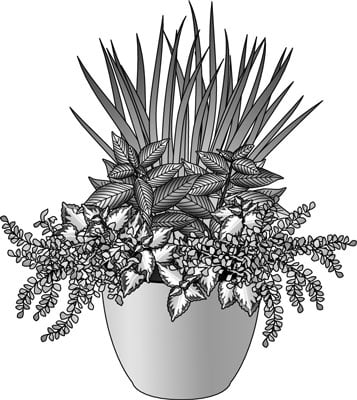
Container: A deep, gently curving bowl complements this combination of spiky, shrubby, and trailing plants. Choose a bowl that’s at least 24 inches in diameter for best results.
Plants: One phormium, two Persian shield plants, two coleus plants, and four licorice plants.
How to plant: Start by planting the phormium in the center. Place the Persian shields on opposite sides of the phormium. Place the coleus plants on the remaining sides. Then plant the licorice plants around the perimeter.
Special tips: Pinch the growing tips of coleus and Persian shield plants to keep them shrubby. Keep the soil moist but not saturated — how much water the plants need depends on the porosity and size of the container as well as wind, air temperature, and amount of shade.
Shade-lover’s delight
Dappled light, refreshing shade, and cool breezes paint the backdrop for this winning combination featuring a flower-filled, rustic planter box. And with scenery defined by lush plants blooming in cool, regal colors, you have a garden retreat that’s hard to resist. A combination of trailing and upright fuchsias with striking, two-toned flowers anchors the box with long-lasting color. Lacy, light green fronds of maidenhair fern add balance and texture, while the impatiens provide almost constant color. The color combination of lavender, purple, lilac, rose, and pink shades harmonizes well. A classic touch of white brings life and contrast to the collection.
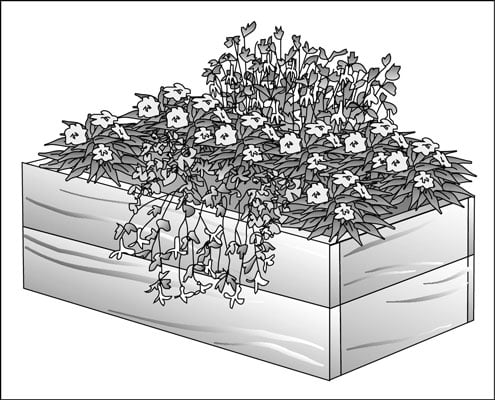
Container: We suggest a container made of old lumber. You may find rustic, recycled garden containers ready-made at nurseries and garden centers. Or, with a hammer and a few nails, you can put one together yourself using planks or boards. Stick to redwood or cedar for the longest-lasting results. Ours is 4 feet long, 11 inches deep, and 10 inches wide.
Plants: Three upright fuchsias, one trailing fuchsia, two maidenhair ferns, and nine impatiens in mixed colors.
How to plant: Set the tall fuchsias along the back, leaving a few inches in between plants and at the corners. Next, plant the trailing fuchsia in the center along the front rim. Now plant the two ferns on either side of the trailing fuchsia. Fill in the remaining spaces with the impatiens, varying the colors as you go.
Special tips: It’s important to keep your planter from staying overly wet, even though the shade-lovers like plenty of water. Allow the bottom to dry by raising the box a couple of inches; set it on bricks or planks. Because you need to water often, make sure you maintain a regular fertilizing schedule.

Gardening Glossary
annuals
Plants that complete their entire life cycle within one growing season. The plant germinates from seed, grows and blooms, and then produces seed and dies.

Gardening Glossary
biennials
A plant that take two growing seasons to complete its life cycle. It germinates and grows leaves and stems in the first year; produces flowers and fruit (seed) in the second, and then dies.

Gardening Glossary
bolt
When a plant flowers or produces seed prematurely.

Gardening Glossary
cold frame
A wooden or concrete block box in which you can grow plants or hold dormant during the cold winter months.

Gardening Glossary
cole crops
A family of vegetables, including broccoli, cabbage, cauliflower, kale, and Brussels sprouts. They thrive in cooler weather.

Gardening Glossary
complete fertilizer
Any fertilizer that contains all three of the primary nutrients, N-P-K (nitrogen, phosphorus, potassium). Phrase is based on regulations governing the fertilizer industry. Does not mean that the fertilizer literally contains everything a plant needs to thrive.

Gardening Glossary
deadheading
The practice of pinching or cutting off spent flowers

Gardening Glossary
evaporative-pad humidifier
A humidifier in which fans blow across a moisture-laden pad that sits in a reservoir of water.

Gardening Glossary
harden off
The process of acclimating plants grown indoors gradually to the brighter light and cooler temperatures of the outside world.

Gardening Glossary
hardiness
The ability of a plant to survive is called its hardiness.

Gardening Glossary
humus
A stable end product of organic-matter decomposition that's believed to increase microbial activity in soil, improve soil structure, and enhance the root development of plants.

Gardening Glossary
Bacillus thuringiensis Bt
An effective bacteria that attacks only the larvae of caterpillar family insects. It is safe to other insects, animals, and humans.

Gardening Glossary
macronutrients
Mineral nutrients that plants need in the largest quantities: nitrogen, phosphorus, potassium, calcium, magnesium, and sulfur.

Gardening Glossary
mulch
Organic or inorganic material placed over the surface of soil, usually directly over the root zone of growing plants. Used to conserve moisture, kill weed seedlings, modify soil temperature, provide attractive covering to garden beds.

Gardening Glossary
organic matter
Once-living stuff like compost, sawdust, animal manure, ground bark, grass clippings, and leaf mold (composted tree leaves). Used to enrich soil and improve soil texture.

Gardening Glossary
perennials
Any plant with a life cycle of three or more years. Herbaceous (non-woody) perennials include flowering plants and herbs, mainly. Woody perennials include trees and shrubs. Longevity depends on the plant and growing conditions.

Gardening Glossary
pH
The measure of soil's acidity. Soil with low pH means it's too acidic; soil with high pH means it's alkaline. Most plants grow best in soil with a pH value between 6.5 and 7.2. Neutral soils measure 7.

Gardening Glossary
photosynthesis
The process through which plants take nutrients from the air and from the water in the soil to produce sugars that fuels the plant's growth.

Gardening Glossary
primary nutrients
Nitrogen, phosphorous, and potassium are the three nutrients plants need in the largest quantities.

Gardening Glossary
root crops
Plants with edible underground roots such as onions, carrots, beets, potatoes, turnips. Most root crops are cold-weather crops.

Gardening Glossary
self-blanching
A type of cauliflower with leaves that naturally curl over the head and exclude light. Requires cool temperatures for leaves to curl effectively.

Gardening Glossary
sets
Small onion bulbs, about 1/2-inch wide, that were started from seed the previous year. Grow onion sets with the pointy end up.

Gardening Glossary
side-dressing
The act of adding a small amount of fertilizer around or "on the side" of plants after they're growing.

Gardening Glossary
succession planting
Planting small, 2-to-4-foot patches of plants every two weeks throughout the growing season so that you can harvest a crop over an extended period of time.

Gardening Glossary
thinning
The act of cutting the least robust seedlings in your garden to give the healthier plants more room to grow.

Gardening Glossary
vining crops
Crops that grow on vines, such as cucumbers, melons, pumpkins, and winter squash. They usually require support (staking, trellising, etc.) to keep them off the ground.