

 Main Menu
Book & Article Categories
- Main Menu
Book & Article Categories
- Main Menu
Collections
Explore all collections
Articles & Books From Investing
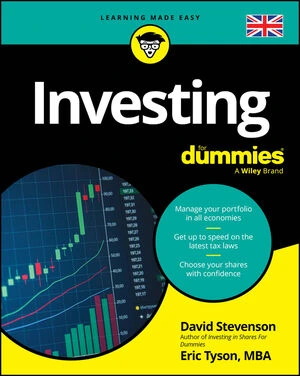
Upgrade your financial future and stay ahead of the economic curve. This latest UK edition of Investing For Dummies is packed with up-to-date financial insights, covering the newest trends and developments that are reshaping the investment landscape. This comprehensive and beginner-friendly guidebook will help you build a robust investment portfolio in all economies and monitor its ongoing performance, for financial security you can rely upon.
Cheat Sheet / Updated 07-21-2025
Stocks, bonds, mutual funds, exchange-traded funds, and property — the allure of earning high returns from these investments gets people’s attention. However, people also hear about the risks involved in chasing those greater potential returns when investing.Before you set out to invest, you must get your financial house in order and increase your knowledge to make your best investing decisions.

Make smart decisions in any real estate market Real estate is always on the radar of investors looking for growth opportunities. Real Estate Investing For Dummies is your no-nonsense guide to adding real estate to your own portfolio. Considered one of the most desirable investment types, real estate is a great way to build wealth—if you know how to navigate the challenges.

Learn how to maximize profits and minimize risks trading over the short term Swing Trading For Dummies introduces you to a trading methodology designed to generate big profits in the short term. Unlike buy and hold investing, Swing Traders endeavor to enter a stock at the precise moment a major uptrend begins and exit for a large profit a few weeks or months later.

Invest confidently—and successfully—in any climate Making your own investment decisions can be intimidating and overwhelming. Investors have a huge array of investment options to choose from, and sorting through the get-rich-quick hype can be exhausting. Investing For Canadians For Dummies provides you with a clear-headed, honest overview of the investing landscape, helping you to determine what investments are right for your goals.

All the investing basics you need to know, from the bestselling For Dummies lineThis updated edition of Investing For Dummies offers sound advice to everyone who wants to build wealth through investing. Learn about stock investing, bond investing, mutual fund and ETF investing, real estate investing, and picking most trustworthy resources for your needs.
Cheat Sheet / Updated 05-08-2024
You're investing in stocks — good for you! To make the most of your money and your choices, educate yourself on how to make stock investments confidently and intelligently, familiarize yourself with the online resources available to help you evaluate stocks, and find ways to protect the money you earn. Also, be sure to do your homework before you invest in any company's stock.
Article / Updated 03-20-2024
Factor investing is an investment portfolio general strategy that favors a systematic approach using factors or “shared characteristics” of individual stocks (and other assets, such as bonds) that have a historical record of superior risk and return performance. These factors can range from individual characteristics, such as the company’s sales (revenue indicated on the company’s income statement) or debt (total liabilities indicated on their balance sheet), to their performance in macro environments, such as inflation or economic growth.
Cheat Sheet / Updated 03-14-2024
Artificial intelligence (otherwise known as AI) can save you lots of money and help you do things that were either costly or a pipe dream only a few years ago — and that includes helping you with investing and financial pursuits.Saving money by using artificial intelligenceArtificial intelligence is a groundbreaking technology that’s constantly changing.

Winning strategies for investors looking to boost gains with artificial intelligence AI is one of the hottest investment trends on Wall Street. AI Investing For Dummies gives you all the must-know details on how artificial intelligence can benefit investors. You’ll learn how powerful AI can be in helping you make better decisions, identify hidden opportunities, and build wealth in stocks, bonds, commodities, and real estate.

