
Extending Notes with Dots and Ties
All notes have a certain value, indicated by the size and shape of the note, that determines how long a pitch should be held by the voice or an instrument. Sometimes, however, you want to add to the value of a note to create syncopation or other interest in your musical piece. You can extend a note's value in written music using dots and ties. Here's the lowdown on each:
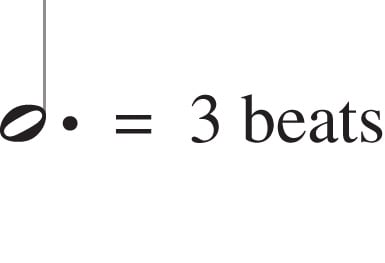
Augmentation dot: This dot indicates that a note's value is increased by one half of its original value. The most common use of the dotted note is when a half note is made to last three quarter-note beats instead of two, as shown in the figure. Less common is the dotted whole note. This dotted note means the whole note's value is increased from four beats to six beats.
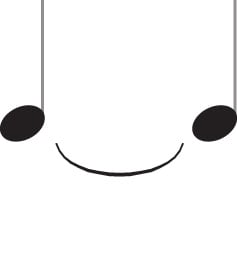
Tie: Ties connect notes of the same pitch to create one sustained note instead of two separate ones. When you see a tie, simply add the notes together. For example, a quarter note tied to another quarter note equals one note held for two beats, as shown in the figure.
Piano Glossary
accidental
A sharp or flat not in the key signature.

Piano Glossary
bar line
A line that divides music into measures, breaking up the musical paragraph into smaller, measurable groups of notes and rests.

Piano Glossary
bass clef
A musical symbol that indicates lower the notes, generally played with the left hand.

Piano Glossary
beat
The steady pulse of a piece of music; what you tap your foot to.

Piano Glossary
C position
Placing your right-hand thumb on middle C and your other right-hand fingers on the four successive white keys.

Piano Glossary
chord
Three or more notes played at the same time.

Piano Glossary
Circle of Fifths
An order that starts with no sharps and flats and cycles the ring of keys to all 12 keys.

Piano Glossary
clef
A musical symbol that tells you the names of the lines and spaces on the staff.

Piano Glossary
fingerings
Numbers written above the notes that tell you which finger to use for each note.

Piano Glossary
G position
Placing your right hand on the G above middle C and your other right-hand fingers on the four successive white keys.

Piano Glossary
grand piano
The largest piano. A concert grand is 9 feet long; a baby grand is about 5 feet.

Piano Glossary
grand staff
The treble clef and bass clef joined together with a brace at the start of the left side.

Piano Glossary
home note
The base note of a piece of music. All the notes in a song have a relation to the home note based on how close or far they are to home.

Piano Glossary
interval
The distance between any two musical notes.

Piano Glossary
key
A set of notes that corresponds to a certain scale.

Piano Glossary
key signature
Notation placed just after the clef on every line of music to tell the performer what key the song is in.

Piano Glossary
ledger line
An imaginary line running above or below the staff, extending the five-line staff to represent notes above and below the staff.

Piano Glossary
measure or bar
A batch of notes with a specific number of beats — most commonly four beats — that helps a performer keep time.

Piano Glossary
middle C
The 40th key of a piano, close to the center of the keyboard. The first key a new pianist learns the placement of.

Piano Glossary
MIDI Musical Instrument Digital Interface
A device that allows communication between electronic, digital equipment.

Piano Glossary
notehead
The printed representation of a note. A notehead is oval and may be solid or open, an attached to a stem or not.

Piano Glossary
octave line or ottava line
The line that tells you to play the indicated note or notes an octave higher or lower than written.

Piano Glossary
root note
The lowest note of a chord.

Piano Glossary
scale
A series of notes in a specific, consecutive order.

Piano Glossary
staff
The five lines and four spaces music is written on.

Piano Glossary
tempo
How fast or slow the beat is.

Piano Glossary
time signature
The indication of the meter of a piece of music.

Piano Glossary
tonic
The bottom note of a scale.

Piano Glossary
treble clef
A musical symbol that indicates higher the notes, generally played with the right hand.

Piano Glossary
triplet
Three notes per beat.

Piano Glossary
upright piano
A piano that sits upright against a wall. Also called verticals, they vary in height from the spinet up to full-size uprights.