
Choosing and Caring for Grandiflora Roses
By
The National Gardening Association,
Bob Beckstrom,
Karan Davis Cutler,
Kathleen Fisher,
Phillip Giroux,
Judy Glattstein,
Mike MacCaskey,
Bill Marken,
Charlie Nardozzi,
Sally Roth,
Marcia Tatroe,
Lance Walheim, and
Ann Whitman
As a class, grandiflora roses bear large, long-stemmed, hybrid tea-like flowers, either in clusters or one to a stem. Generally, grandiflora plants are tall, hardy, and vigorous, but plant habits can vary a bit. Some of the newer varieties are smaller, more compact plants.
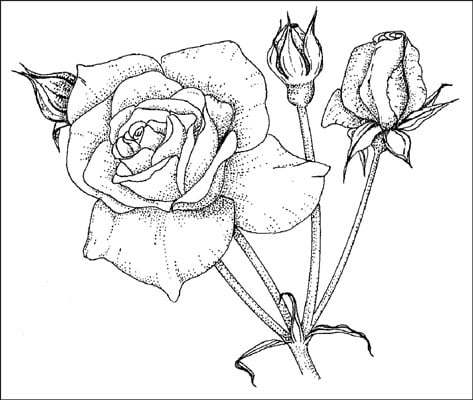
Care for grandifloras as you would hybrid teas — watering, fertilizing, winter protection, pruning practices, and so on are pretty much the same. Gardeners often use grandifloras like hybrid teas, planting them in rows for cut flowers. However, they tend to put on a better show of color than many hybrid teas do, so don’t hesitate to use them in the landscape. Tall varieties make useful hedges or background plants. You can mix lower-growing types, such as ‘Crimson Bouquet’, with other flowers in perennial borders.
Here is a list of some of all-time favorite grandifloras.
Red and pink grandifloras: Here are some beautiful red and pink grandifloras to consider for your garden:
‘Candy Apple’: Lustrous apple-red blossoms with a slight fragrance and lots of petals bloom in a cupped form.
‘Fame!’: Large, beautifully formed, deep pink, lightly scented double blossoms (30 to 35 petals).
‘Love’: Bright red flowers with a silvery reverse and 35 petals. Slight, spicy fragrance.
‘Prima Donna’: Deep, fuschia-pink flowers have 27 petals. Light fragrance.
‘Queen Elizabeth’: The first grandiflora, and still the finest. Clear pink, ruffled blooms adorn the stately, tall bush in long-stemmed clusters. The abundant blooms are high-centered or cup-shaped, moderately fragrant, and vigorous.
Orange grandifloras: Choosing a favorite orange grandiflora is tough, but any of these are contenders:
‘Candelabra’: Glowing coral orange, double flowers (about 25 petals) have exceptional form and a slight fragrance.
‘Montezuma’: Produces loads of long-stemmed, reddened coral-orange flowers with 30 to 35 petals and a light scent.
‘Ol’: Long-lived, ruffled flowers with brilliant orange-red tones that don’t fade. The blooms have 40 to 45 petals and a slight fragrance.
‘Reba McEntire’: Bright orange-red, double blooms with about 30 petals are borne in clusters and have a slight fragrance.
‘Solitude’: Brilliant bright orange blooms with hints of yellow and gold and 30 to 35 petals show their best color with heat. Mild, spicy fragrance.
Yellow and white grandifloras: Of these two white grandifloras, only ‘White Lightnin’ has stood the test of time:
‘Gold Medal’: Nearly constant supply of dark gold buds and richly fragrant, golden-yellow flowers have a flirtation of red at the tips and 30 to 35 petals. (This rose is featured in the color insert.)
‘Mt. Hood’: Masses of full and fleshy ivory-white flowers with 40 to 45petals on a bushy plant. Light fragrance.
‘Shining Hour’: Deep yellow, cup-shaped flowers grow singly and in clusters or sprays with 33 petals and have a moderate fragrance.
‘White Lightnin’: Small, white clusters of cupped, very fragrant flowers with 26 to 32 petals burst forth all season on the low growing, robust bush.
Lavender grandifloras: The rose world contains several great lavender (or mauve) grandifloras:
‘Cologne’: Light lavender, intensely fragrant double flowers with 17 to 25 petals.
‘Fragrant Plum’: The buds are long and pointed; elegant, deep plum flowers have good form and a strong, fruity fragrance. Color brightens inheat.
‘Lagerfeld’: Light silvery lavender, double flowers (30 to 35 petals) have a strong fragrance.
‘Melody Parfume’: Deep purple buds open into lavender double blooms (about 30 petals) gradually fading with a silvery sheen. Sweet, spicy fragrance.
‘Spellcaster’: Deep mauve and lavender blooms with 26 to 40 petals and intense fragrance.
Multicolored grandifloras: All these are good, but ‘Octoberfest’ really shines:
‘Arizona’: High-centered blooms with 35 to 40 petals are blended tones of bronzy orange and mellow pink that don’t fade. Powerful fragrance.
‘Heart O’ Gold’: Deep golden-yellow blooms edged with soft pink. Flowers have 30 to 35 petals and a strong, fruity fragrance.
‘Octoberfest’: Autumn shades of red, orange, and yellow bloom in large clusters of double blooms with about 17 to 25 petals. Pleasing, fruity fragrance.
‘Quaker Star’: The double flowers with 35 to 40 petals are dark pink with orange tips and orange reverse. Free-blooming but has no fragrance.

Gardening Glossary
annuals
Plants that complete their entire life cycle within one growing season. The plant germinates from seed, grows and blooms, and then produces seed and dies.

Gardening Glossary
biennials
A plant that take two growing seasons to complete its life cycle. It germinates and grows leaves and stems in the first year; produces flowers and fruit (seed) in the second, and then dies.

Gardening Glossary
bolt
When a plant flowers or produces seed prematurely.

Gardening Glossary
cold frame
A wooden or concrete block box in which you can grow plants or hold dormant during the cold winter months.

Gardening Glossary
cole crops
A family of vegetables, including broccoli, cabbage, cauliflower, kale, and Brussels sprouts. They thrive in cooler weather.

Gardening Glossary
complete fertilizer
Any fertilizer that contains all three of the primary nutrients, N-P-K (nitrogen, phosphorus, potassium). Phrase is based on regulations governing the fertilizer industry. Does not mean that the fertilizer literally contains everything a plant needs to thrive.

Gardening Glossary
deadheading
The practice of pinching or cutting off spent flowers

Gardening Glossary
evaporative-pad humidifier
A humidifier in which fans blow across a moisture-laden pad that sits in a reservoir of water.

Gardening Glossary
harden off
The process of acclimating plants grown indoors gradually to the brighter light and cooler temperatures of the outside world.

Gardening Glossary
hardiness
The ability of a plant to survive is called its hardiness.

Gardening Glossary
humus
A stable end product of organic-matter decomposition that's believed to increase microbial activity in soil, improve soil structure, and enhance the root development of plants.

Gardening Glossary
Bacillus thuringiensis Bt
An effective bacteria that attacks only the larvae of caterpillar family insects. It is safe to other insects, animals, and humans.

Gardening Glossary
macronutrients
Mineral nutrients that plants need in the largest quantities: nitrogen, phosphorus, potassium, calcium, magnesium, and sulfur.

Gardening Glossary
mulch
Organic or inorganic material placed over the surface of soil, usually directly over the root zone of growing plants. Used to conserve moisture, kill weed seedlings, modify soil temperature, provide attractive covering to garden beds.

Gardening Glossary
organic matter
Once-living stuff like compost, sawdust, animal manure, ground bark, grass clippings, and leaf mold (composted tree leaves). Used to enrich soil and improve soil texture.

Gardening Glossary
perennials
Any plant with a life cycle of three or more years. Herbaceous (non-woody) perennials include flowering plants and herbs, mainly. Woody perennials include trees and shrubs. Longevity depends on the plant and growing conditions.

Gardening Glossary
pH
The measure of soil's acidity. Soil with low pH means it's too acidic; soil with high pH means it's alkaline. Most plants grow best in soil with a pH value between 6.5 and 7.2. Neutral soils measure 7.

Gardening Glossary
photosynthesis
The process through which plants take nutrients from the air and from the water in the soil to produce sugars that fuels the plant's growth.

Gardening Glossary
primary nutrients
Nitrogen, phosphorous, and potassium are the three nutrients plants need in the largest quantities.

Gardening Glossary
root crops
Plants with edible underground roots such as onions, carrots, beets, potatoes, turnips. Most root crops are cold-weather crops.

Gardening Glossary
self-blanching
A type of cauliflower with leaves that naturally curl over the head and exclude light. Requires cool temperatures for leaves to curl effectively.

Gardening Glossary
sets
Small onion bulbs, about 1/2-inch wide, that were started from seed the previous year. Grow onion sets with the pointy end up.

Gardening Glossary
side-dressing
The act of adding a small amount of fertilizer around or "on the side" of plants after they're growing.

Gardening Glossary
succession planting
Planting small, 2-to-4-foot patches of plants every two weeks throughout the growing season so that you can harvest a crop over an extended period of time.

Gardening Glossary
thinning
The act of cutting the least robust seedlings in your garden to give the healthier plants more room to grow.

Gardening Glossary
vining crops
Crops that grow on vines, such as cucumbers, melons, pumpkins, and winter squash. They usually require support (staking, trellising, etc.) to keep them off the ground.