
Banishing Insects that Prey on Container Plants
Of the thousands of insect species that call your plants home just a handful pose problems for gardeners. By far, most insects you see on your plants are benign, or even beneficial, so carefully identify an insect before deeming it a pest to be controlled. Here are the most common insect pests that you’re likely to find infesting your container plants and the best ways to control them:
Aphids: Aphids are tiny, pear-shaped pests that come in many colors, including black, green, and red. They congregate on new growth and flower buds, sucking plant sap with their needlelike noses. Aphids leave behind a sticky honeydew substance that may in turn be colonized by black, sooty mold. The honeydew often attracts ants, too, and while the ants themselves aren’t plant pests, they can signal you to look for aphids and other honeydew-producing pests.
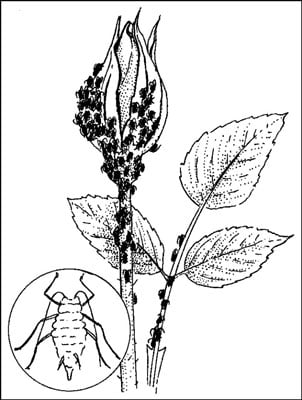
Aphids are easy to control. You can knock them off sturdy plants with strong jets of water from a hose, or use insecticidal soap, spinosad, or pyrethrins..
Borers: Borers tunnel into the wood of fruit trees, white birches, dogwoods, shade trees, and rhododendrons, among others. Look for borer-resistant plants. Keep susceptible plants growing vigorously and watch for signs of borer damage — dead bark, sawdust piles, partial wilting, and poor performance. When you find borers, cut off and destroy severely infested stems and limbs. Inject Bt or parasitic nematodes into remaining borer holes, depending upon the plant and type of borer.
Geranium budworms: Geranium budworms are very frustrating pests of geraniums, nicotiana, ageratum, and petunias. The small caterpillars bore into flower buds and eat the flowers before they open or feed on open blooms. To confirm the presence of these heartless monsters, look for small holes in blossoms or the tiny black droppings the caterpillars leave behind. To control, pick off infested flower buds and spray with Bt, spinosad, or pyrethrins.
Mealybugs: These small, sucking insects, most common on houseplants, cover their bodies with a white cottony substance that makes them easy to identify. They usually feed in groups, forming a cottony mass on branches and stems. Wash off small numbers with a cotton ball dipped in rubbing alcohol; for larger infestations, spray with insecticidal soap or neem.
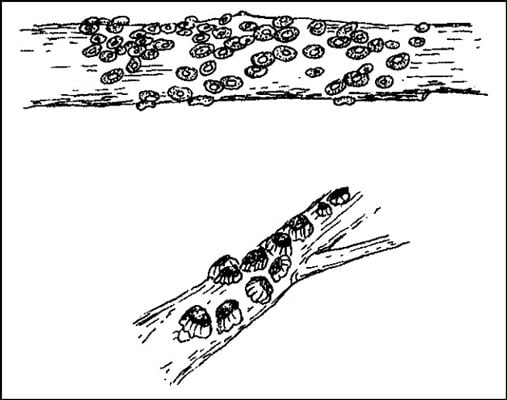
Scale: These tiny insects look like small bumps on plant stems and leaves. They hide under a turtlelike shell that serves as a shield. These pests suck plant sap and can kill plants if present in large numbers. The first sign of scale is often the sticky honeydew they secrete. Remove and destroy badly infested stems. Clean off light infestations with a cotton ball soaked in rubbing alcohol. Spray with dormant oil in winter or summer oil during the growing season.
Spider mites: Spider mites are tiny, eight-legged spider relatives that you can barely see without a magnifying glass. If the population gets big enough, you can see telltale fine webbing beneath the leaves. And as the mites suck plant juices, the leaves become yellowish with a silvery or bronze stippling. The plant may even start dropping leaves. Mites are most common in hot, dry summer climates and on dusty plants. Houseplants, tomatoes, and roses are commonly infested.
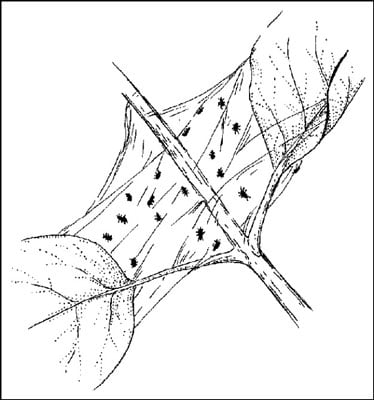
A daily wash with a strong jet of water from a hose can help keep infestations down. You can also control spider mites with insecticidal soap and summer oil sprays.
Thrips: Thrips are another almost-invisible troublemaker. They feed on flower petals, causing them to be discolored and the buds to be deformed as they open. They also feed on leaves, causing them to become deformed and giving them a stippled look. Impatiens, roses, and gladioluses are commonly infested.
Many beneficial insects feed on thrips, especially lacewings. Insecticidal soaps and hot pepper wax are also effective against thrips.
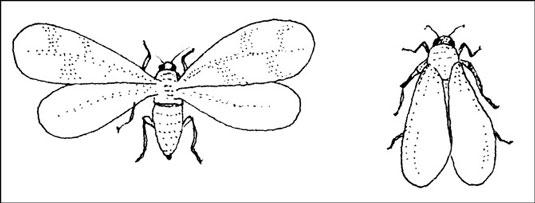
Whiteflies: Whiteflies look like small, white gnats, but they suck plant juices and can proliferate in warm climates and greenhouses. They tend to congregate on the undersides of leaves. You can trap whiteflies with yellow sticky traps sold in nurseries. Insecticidal soaps, summer oil, hot pepper wax, and pyrethrins are effective sprays.
Gardening Glossary
annuals
Plants that complete their entire life cycle within one growing season. The plant germinates from seed, grows and blooms, and then produces seed and dies.

Gardening Glossary
biennials
A plant that take two growing seasons to complete its life cycle. It germinates and grows leaves and stems in the first year; produces flowers and fruit (seed) in the second, and then dies.

Gardening Glossary
bolt
When a plant flowers or produces seed prematurely.

Gardening Glossary
cold frame
A wooden or concrete block box in which you can grow plants or hold dormant during the cold winter months.

Gardening Glossary
cole crops
A family of vegetables, including broccoli, cabbage, cauliflower, kale, and Brussels sprouts. They thrive in cooler weather.

Gardening Glossary
complete fertilizer
Any fertilizer that contains all three of the primary nutrients, N-P-K (nitrogen, phosphorus, potassium). Phrase is based on regulations governing the fertilizer industry. Does not mean that the fertilizer literally contains everything a plant needs to thrive.

Gardening Glossary
deadheading
The practice of pinching or cutting off spent flowers

Gardening Glossary
evaporative-pad humidifier
A humidifier in which fans blow across a moisture-laden pad that sits in a reservoir of water.

Gardening Glossary
harden off
The process of acclimating plants grown indoors gradually to the brighter light and cooler temperatures of the outside world.

Gardening Glossary
hardiness
The ability of a plant to survive is called its hardiness.

Gardening Glossary
humus
A stable end product of organic-matter decomposition that's believed to increase microbial activity in soil, improve soil structure, and enhance the root development of plants.

Gardening Glossary
Bacillus thuringiensis Bt
An effective bacteria that attacks only the larvae of caterpillar family insects. It is safe to other insects, animals, and humans.

Gardening Glossary
macronutrients
Mineral nutrients that plants need in the largest quantities: nitrogen, phosphorus, potassium, calcium, magnesium, and sulfur.

Gardening Glossary
mulch
Organic or inorganic material placed over the surface of soil, usually directly over the root zone of growing plants. Used to conserve moisture, kill weed seedlings, modify soil temperature, provide attractive covering to garden beds.

Gardening Glossary
organic matter
Once-living stuff like compost, sawdust, animal manure, ground bark, grass clippings, and leaf mold (composted tree leaves). Used to enrich soil and improve soil texture.

Gardening Glossary
perennials
Any plant with a life cycle of three or more years. Herbaceous (non-woody) perennials include flowering plants and herbs, mainly. Woody perennials include trees and shrubs. Longevity depends on the plant and growing conditions.

Gardening Glossary
pH
The measure of soil's acidity. Soil with low pH means it's too acidic; soil with high pH means it's alkaline. Most plants grow best in soil with a pH value between 6.5 and 7.2. Neutral soils measure 7.

Gardening Glossary
photosynthesis
The process through which plants take nutrients from the air and from the water in the soil to produce sugars that fuels the plant's growth.

Gardening Glossary
primary nutrients
Nitrogen, phosphorous, and potassium are the three nutrients plants need in the largest quantities.

Gardening Glossary
root crops
Plants with edible underground roots such as onions, carrots, beets, potatoes, turnips. Most root crops are cold-weather crops.

Gardening Glossary
self-blanching
A type of cauliflower with leaves that naturally curl over the head and exclude light. Requires cool temperatures for leaves to curl effectively.

Gardening Glossary
sets
Small onion bulbs, about 1/2-inch wide, that were started from seed the previous year. Grow onion sets with the pointy end up.

Gardening Glossary
side-dressing
The act of adding a small amount of fertilizer around or "on the side" of plants after they're growing.

Gardening Glossary
succession planting
Planting small, 2-to-4-foot patches of plants every two weeks throughout the growing season so that you can harvest a crop over an extended period of time.

Gardening Glossary
thinning
The act of cutting the least robust seedlings in your garden to give the healthier plants more room to grow.

Gardening Glossary
vining crops
Crops that grow on vines, such as cucumbers, melons, pumpkins, and winter squash. They usually require support (staking, trellising, etc.) to keep them off the ground.